For years, digital platforms controlled how ads were shown.
They forced users to sit through the same advertisement again and again — sometimes 5–10 times a day — until the viewer became:
frustrated
irritated
disengaged
ready to skip instantly
This wasn’t “advertising.”
This was forcing attention instead of earning it.
In 2026, this model finally hit a wall.
Consumers don’t tolerate forced ads anymore.
They skip instantly, mute immediately, or switch platforms altogether.
And as this resistance grows, a new advertising revolution in India is taking over — one built on respect, value, and real human environments.
🔥 2026 Shift: From Forced Attention → to Voluntary Engagement
Across India, brands have realised something powerful:
People don’t hate ads.
They hate being forced to watch them.
The moment you force someone to sit through an ad:
irritation rises
product trust drops
brand recall actually decreases
you pay more for worse results
This is why repetitive forced ads on digital platforms have become the most inefficient marketing spend of 2026.
Brands want something better.
Consumers want something better.
And this demand has created the rise of consumer-first hyperlocal advertising.
⭐ Why Hyperlocal, Real-World Advertising Is Exploding in 2026
Instead of pushing ads on people, brands are now placing ads where consumers are comfortable, relaxed, and naturally present — inside local commercial spaces:
cafes
gyms
salons
retail stores
neighbourhood markets
daily-visit shops
No interruption.
No irritation.
No forced repetition.
Ads blend into the physical environment — and consumers notice them naturally.
This leads to:
higher attention
Higher brand trust
higher recall
real engagement
🌍 Traditional Advertising Ignored the Consumer
Old offline advertising didn’t care about the viewer either.
Billboards never asked:
“Did this help the consumer?”
“Did they gain anything from seeing it?”
“Did it improve their experience?”
Newspapers didn’t ask what the customer wanted.
Posters didn’t offer anything in return.
Mall ads didn’t give value — they only demanded attention.
It was always brand-first, consumer-last.
2026 has changed that forever.
🌟 Where Adsmunch Fits Into This New, Consumer-First Era
Adsmunch is part of the new wave of platforms rebuilding offline advertising with a value-first mindset — something no traditional medium ever offered.
Instead of treating consumers as targets, Adsmunch treats them as participants.
Here’s how:
✔ 1. Ads Don’t Force Attention
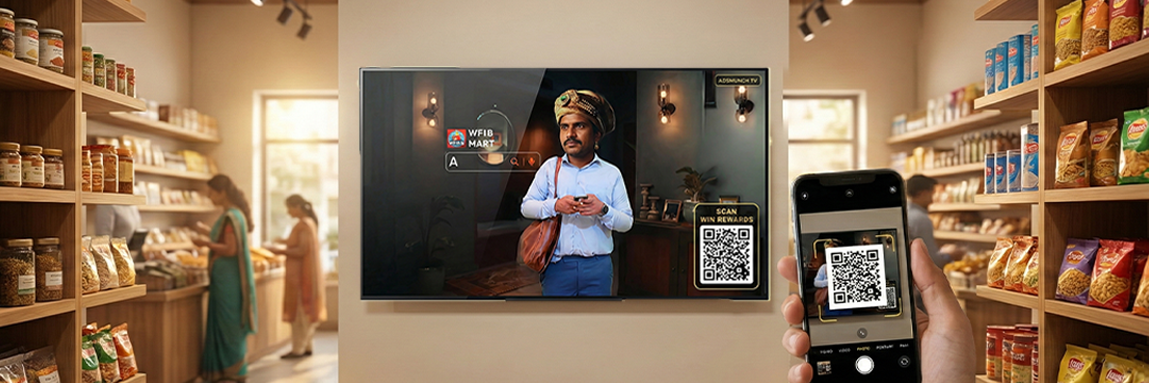
Ads appear on Android TVs in real spaces—not as interruptions, but as part of the environment.
People notice them naturally without irritation.
✔ 2. Consumers Actually Get Something
This is the biggest revolution.
Through the Adsmunch app, consumers can earn:
rewards
scratch cards
coupons
discounts
offers
interactive scans
So the viewer isn’t being interrupted —
They’re being rewarded.
✔ 3. The Consumer Journey Becomes Fun
Instead of “Skip Ad,” the user sees:
➡️ Scan & Win
➡️ Unlock Reward
➡️ Get Instant Offer
This transforms advertising from forced → into participatory.
✔ 4. Respect = Higher Conversion
When you respect the consumer, they respond better.
They remember your brand.
They come back.
They trust your message.
This is why 2026 marketers consider consumer-first hyperlocal ads as the highest-ROI medium in India.
🎯 Final Takeaway:
2026 isn’t just about better advertising.
It’s about respecting the viewer.
Forced ads belonged to the old world.
Consumer-first advertising belongs to the future.
Adsmunch is part of the platforms shaping that future —
where brands reach people naturally,
where consumers feel valued,
and where advertising finally becomes a win-win.
This is the shift India was waiting for.
And it has already begun.