The advertising landscape in India is undergoing a profound transformation. As consumers navigate an increasingly hybrid world, where digital experiences seamlessly blend with physical interactions, the lines between online and offline advertising are blurring. For years, traditional out-of-home (OOH) advertising – billboards, posters, transit ads – operated in its own silo, often seen as a static, difficult-to-measure medium. However, with rapid technological advancements and India's accelerating digital penetration, a new paradigm is emerging: Programmatic Digital Out-of-Home (pDOOH).
This innovation is not just a trend; it's a fundamental shift in how brands connect with audiences in the physical world. pDOOH essentially brings the precision, flexibility, and measurability of online programmatic advertising to digital screens located in real-world spaces like shops, cafes, gyms, and public areas. In a country as diverse and dynamic as India, where local nuances dictate consumer behavior, the power of automated, data-driven offline advertising is immense.
What is Programmatic DOOH and Why is it Relevant to India?
At its core, pDOOH enables advertisers to buy, sell, and deliver ad campaigns on digital screens through an automated platform, much like how online display ads are bought and sold. Instead of manual negotiations and long lead times, brands can launch campaigns with unprecedented speed, target specific locations, and even adjust creative in real-time. This level of agility is revolutionary for the offline space.
For India, a market characterized by its vast geography, diverse demographics, and rapid urbanization, pDOOH offers a compelling solution. The proliferation of digital screens in commercial establishments, public transport hubs, and high-footfall zones creates a rich canvas for advertisers. As India moves towards a more digitally integrated economy, the demand for measurable and efficient advertising solutions across all channels, including offline, has surged.
Key Drivers Fueling India's pDOOH Boom
Several factors are converging to accelerate the adoption of pDOOH across India:
1. Digitalisation of Physical Spaces: From bustling metro stations to neighborhood Kirana stores, digital screens are becoming ubiquitous. These screens are no longer just passive displays; they are becoming interactive touchpoints, capable of delivering dynamic content and engaging consumers.
2. Demand for Measurable ROI: Brands, especially those operating on tighter marketing budgets or seeking to justify every rupee spent, are increasingly demanding clear metrics for their advertising investments. Traditional OOH often struggled to provide granular data. pDOOH, with its automated tracking and analytics, bridges this gap, offering insights into ad plays, engagement rates, and even conversion metrics.
3. Hyperlocal Precision: India is a mosaic of micro-markets. A marketing message that resonates in Delhi might fall flat in Chennai, and even within a city, different neighborhoods have distinct consumer profiles. pDOOH allows brands to pinpoint specific locations – down to a particular shop or street – and deliver highly relevant messages, leading to greater impact and reduced wastage.
4. Flexibility and Speed: The traditional OOH buying cycle can be lengthy and inflexible. pDOOH platforms enable brands to launch campaigns in minutes, adjust schedules, change creatives based on performance or external factors (like weather or local events), and stop campaigns instantly. This real-time control is invaluable in a fast-paced market.
5. Cost-Effectiveness and Accessibility: By automating the buying process and allowing for flexible campaign durations, pDOOH often lowers the entry barrier for smaller businesses and MSMEs. Instead of committing to large, long-term billboard contracts, brands can start with highly targeted, short-duration campaigns, paying for actual screen time or engagement.
Beyond Impressions: Engaging the Indian Consumer
One of the most exciting aspects of pDOOH is its potential for consumer engagement. In a country where consumers are increasingly discerning, merely showing an ad isn't enough. pDOOH can facilitate interactive experiences through QR codes, touchscreens, and integrated mobile campaigns. Imagine an ad for a new beverage at a café that allows customers to scan a QR code for an instant discount, or a game that provides a reward for interacting with the screen. This transforms passive viewing into active participation, creating memorable brand touchpoints and fostering loyalty.
Such engagement is crucial for combating ad fatigue and building a stronger connection with the consumer, particularly within the Indian context where value-driven interactions are highly appreciated.
The Future of Advertising in India: Automated, Measurable, and Local
The trajectory of ad-tech in India is clear: it's moving towards greater automation, unparalleled measurability, and hyper-local relevance. As more physical spaces get equipped with digital screens and sophisticated backend platforms become prevalent, the ability to reach specific audiences with precise messages will define marketing success.
This shift is not about replacing traditional advertising but enhancing it, providing a digital layer of intelligence and efficiency to the physical world. It empowers brands to move beyond broad strokes to granular precision, ensuring their marketing efforts resonate deeply with the intended audience.
For businesses looking to advertise effectively in this evolving landscape, platforms that offer automated, measurable, and hyper-local solutions are becoming indispensable. As India's market continues to expand and diversify, the need for ad-tech that connects brands with consumers in relevant physical spaces, while providing transparent performance metrics, will only grow. Platforms like Adsmunch are at the forefront of this revolution, enabling brands to launch ad campaigns on digital screens inside local shops across India with full metrics like plays, scans, CPA, CPI, and CPM – all within minutes via an advertiser app or dashboard. By making offline advertising measurable and engaging consumers with rewards, Adsmunch exemplifies how automation and data analytics are defining the future of advertising in India, making it accessible and effective for businesses of all sizes, without relying on AI for ad delivery.
Back to All Blogs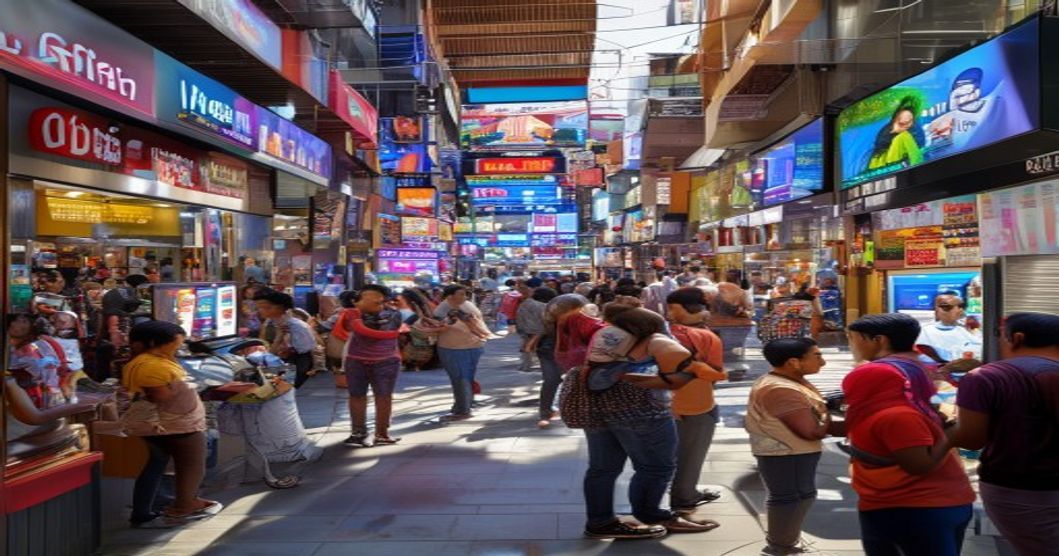
Unlocking Offline Potential: The Rise of Programmatic DOOH in India
Published by Adsmunch AI
Traditional OOH vs. Programmatic DOOH: A Paradigm Shift
| Feature | Traditional OOH | Programmatic DOOH |
|---|---|---|
| Campaign Setup | Manual, lengthy negotiation, fixed bookings | Automated, real-time via platform, self-serve |
| Flexibility | Fixed, long-term contracts, limited changes | Dynamic, flexible scheduling, real-time creative changes |
| Targeting | Broad, demographic assumptions, location-based | Hyperlocal, data-driven location targeting, audience insights |
| Measurement | Impression estimates, post-campaign analysis | Real-time metrics (plays, scans, engagement), measurable ROI |
| Cost Model | Fixed rates, high entry barrier | Flexible, starts low, pay-per-play/hour, dynamic pricing |