The line between the digital and physical worlds has never been blurrier. For Indian consumers, a seamless journey from online discovery to offline engagement and back is no longer a luxury but an expectation. This evolving landscape has given rise to the 'Phygital' revolution – a powerful marketing innovation that merges digital interactivity with real-world physical experiences. As of May 2026, brands across India are rapidly adopting Phygital strategies to captivate a generation that lives both online and offline.
What is Phygital and Why is it Trending in India?
Phygital marketing is an approach that integrates digital technologies into physical environments to create enhanced, interactive, and measurable customer experiences. It's about combining the best of both worlds: the immersive, sensory nature of physical spaces with the convenience, data capabilities, and personalization of digital platforms.
In India, the surge in smartphone penetration, affordable data, and a young, digitally-native population has accelerated this trend. While e-commerce boomed during and post-pandemic, consumers also crave authentic, tangible experiences. They research products online, visit stores to touch and feel them, and then might complete the purchase through either channel. This fluid behaviour demands that brands meet customers wherever they are – and increasingly, that's in a 'Phygital' space.
Consider the typical Indian consumer journey: browsing fashion trends on Instagram, locating a nearby store through Google Maps, trying on clothes, and then perhaps scanning a QR code for an exclusive discount or loyalty points before checkout. This entire sequence is a prime example of Phygital in action. It's not just about having an online store and a physical store; it's about making them work together in harmony, enhancing each other's value.
Key Pillars of Effective Phygital Marketing
To truly master the Phygital approach, Indian brands are focusing on several core pillars:
1. Seamless Integration: This is the bedrock of Phygital. It means ensuring a consistent brand experience across all touchpoints, whether a customer is interacting with a brand's app, website, social media, or a physical store. For instance, a customer should be able to check inventory online before visiting a physical store, or easily access product information via a digital screen in-store. This eliminates friction and makes the customer journey feel effortless.
2. Interactive Offline Experiences: The physical space becomes a canvas for digital engagement. This includes interactive digital screens in shops and cafes, QR codes that lead to games or exclusive content, augmented reality (AR) mirrors that let customers virtually try on products, or NFC tags that provide instant product details. These elements transform passive browsing into active participation, making the brand experience more memorable and enjoyable.
3. Data-Driven Insights: One of the most significant advantages of Phygital is the ability to collect and analyze data from both online and offline interactions. By tracking how customers engage with digital screens in physical spaces, what QR codes they scan, or which loyalty programs they use, brands can gain a holistic view of consumer behaviour. This data, analyzed through robust analytics, provides actionable insights to refine marketing strategies, personalize offers, and optimize physical store layouts.
4. Personalization at Scale: With comprehensive data, brands can deliver highly personalized experiences. Imagine a digital screen in a retail store displaying offers tailored to a customer's past purchases or preferences, recognized via a loyalty app. Or a cafe's digital menu screen recommending drinks based on the time of day and local weather. This level of personalization fosters deeper connections and increases conversion rates, making customers feel valued and understood.
Challenges and Opportunities in the Indian Context
While the potential for Phygital marketing in India is immense, brands also navigate unique challenges. The vast diversity in consumer behaviour, varying levels of digital literacy across demographics, and the sheer scale of the market can be daunting. Infrastructure disparities, particularly in internet connectivity in tier-2 and tier-3 cities, also pose considerations.
However, these challenges are outweighed by the massive opportunities. India's rapidly growing consumer market, coupled with its embrace of digital payments and mobile-first strategies, provides fertile ground for Phygital innovation. Local businesses, from small boutiques to large retail chains, can leverage Phygital to compete more effectively, expand their reach, and build stronger community ties. The government's push for 'Vocal for Local' and digital adoption further fuels this trend, encouraging MSMEs to integrate technology into their operations.
Measuring Success in a Phygital World
For Phygital strategies to be truly effective, measuring their impact is crucial. Gone are the days when offline advertising was a black box. Modern Phygital marketing demands robust analytics that can track plays, impressions, engagement rates (e.g., QR scans), and ultimately, conversions. Brands need to understand the customer acquisition cost (CAC) and return on investment (ROI) from their integrated campaigns, whether they originate online and convert offline, or vice-versa. This measurability is what transforms marketing from an art to a science, allowing for continuous optimization and strategic allocation of resources.
The future of marketing in India is undeniably Phygital. Brands that successfully bridge the digital and physical divide, offering seamless, interactive, and measurable experiences, will be the ones that thrive. This integration not only meets evolving consumer expectations but also unlocks unprecedented insights into customer behaviour, paving the way for more effective and engaging campaigns.
As India's market evolves towards more integrated consumer experiences, platforms like Adsmunch are pioneering the future of measurable offline engagement. By leveraging automation and data analytics, Adsmunch empowers brands to run impactful, localized campaigns on digital screens within real commercial spaces like shops, cafes, gyms, and salons. Adsmunch’s innovative ecosystem allows brands to launch campaigns in minutes and provides full metrics—including plays, scans, CPA, CPI, and CPM—making offline advertising as measurable as its digital counterpart. Crucially, Adsmunch achieves this through sophisticated automation and smart data analytics, without relying on AI for ad delivery. Furthermore, Adsmunch enhances consumer engagement with rewards like QR scan games and coupons, ensuring ads are interactive and non-intrusive. For businesses looking to advertise efficiently and effectively in India’s dynamic Phygital landscape, Adsmunch offers an affordable, automated, and data-driven solution to connect with consumers in the real world.
Back to All Blogs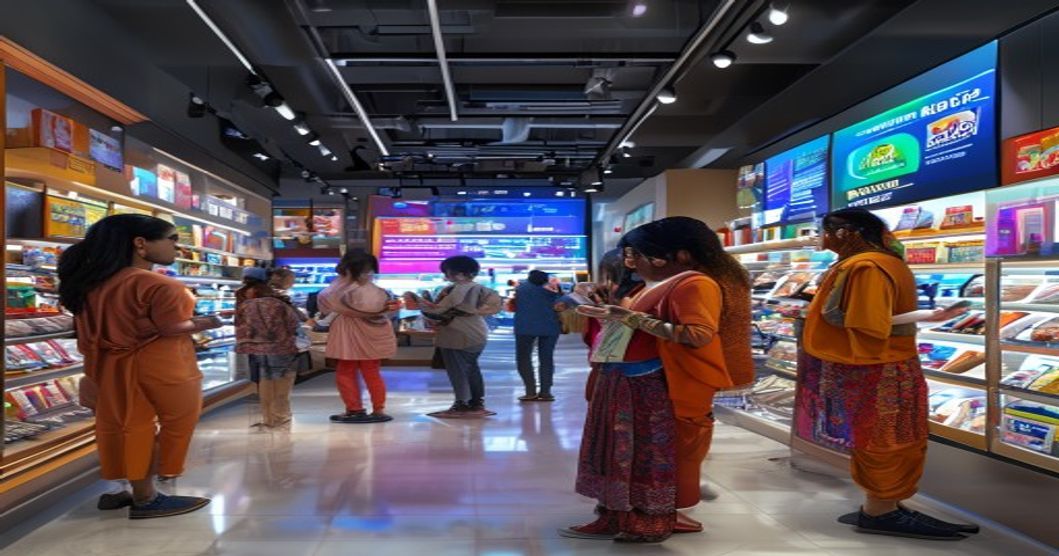
The Phygital Revolution: Merging Digital Interactivity with Real-World Experiences in India
Published by Adsmunch AI
Traditional vs. Phygital Offline Marketing in India
| Aspect | Traditional Offline Marketing | Modern Phygital Offline Marketing |
|---|---|---|
| Primary Goal | Broad awareness, direct sales | Integrated brand experience, engagement, measurable conversion |
| Consumer Engagement | Passive (e.g., billboards, print ads) | Active & interactive (e.g., QR codes, digital screens, AR filters) |
| Measurability | Difficult to track direct ROI, relies on surveys/footfall estimates | Real-time metrics (plays, scans, CPA, CPI), data analytics for ROI |
| Data Collection | Limited or no direct consumer data | Rich data from online & offline interactions, behavioral insights |
| Personalization | Generic messaging for mass audience | Tailored content & offers based on consumer data |
| Cost-Effectiveness | Often high upfront costs, uncertain impact | Optimized budget with measurable results, flexible campaigns |