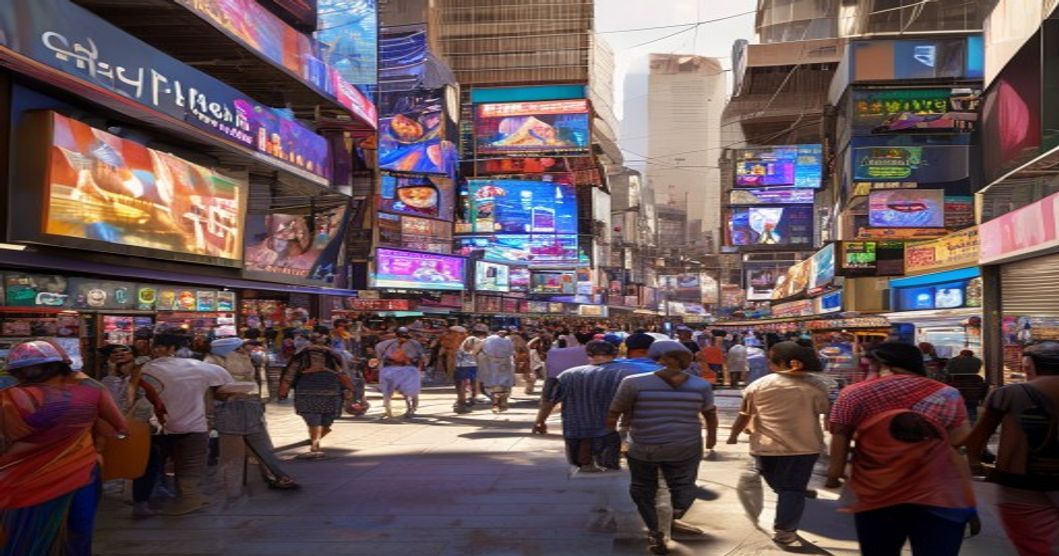
India's advertising sector is in a constant state of flux, driven by technological advancements and an ever-evolving consumer landscape. While digital advertising has dominated conversations for years, a powerful shift is underway in the offline realm, spearheaded by a sophisticated form of advertising technology: Programmatic Digital Out-of-Home, or pDOOH.
The traditional billboard, once a static sentinel of brand messages, is rapidly transforming into a dynamic, data-driven canvas. In a nation where consumers spend a significant portion of their day outside their homes – commuting, shopping, or socializing – the potential of engaging them in physical spaces is immense. pDOOH is not just about placing digital screens; it's about making those screens intelligent, responsive, and measurable, bringing the precision and flexibility of online advertising to the physical world.
The Dawn of Programmatic Digital Out-of-Home (pDOOH) in India
At its core, pDOOH leverages automation and data analytics to buy, sell, and deliver advertisements on digital screens in public spaces in real-time. Unlike traditional DOOH, which often involves manual bookings and fixed schedules, programmatic buying allows advertisers to target specific audiences based on location, time of day, weather conditions, audience demographics, and even real-time events. This sophisticated approach enables brands to display highly relevant and timely messages to the right people, at the right moment, in the right place.
Imagine an ad for a cold beverage appearing on a screen near a bustling metro station only when temperatures soar, or a café promotion popping up during morning rush hour. This level of contextual relevance was once a dream for offline advertisers; now, it's a measurable reality thanks to pDOOH. It signifies a profound leap from broad-brush impressions to highly targeted engagement, marking a new era of efficiency and effectiveness in offline media planning.
Why pDOOH is India's Next Big Ad-Tech Frontier
Several factors are converging to make pDOOH an irresistible proposition for Indian businesses. Firstly, India’s digital-first consumption habits extend beyond personal devices. Consumers are accustomed to dynamic, personalized experiences, and pDOOH delivers this expectation in physical environments. As urbanisation continues at a rapid pace, the number of digital screens in commercial spaces, transit hubs, and retail outlets is exploding, creating a fertile ground for this technology.
Secondly, there's a growing demand for measurability and accountability in advertising spend. Brands are no longer content with mere 'eyeball estimates' for offline campaigns. pDOOH addresses this by providing comprehensive metrics – plays, impressions, dwell time, and even engagement through QR scans or mobile interactions – much like online advertising. This data-driven approach allows for real-time campaign optimisation and a clear understanding of return on investment (ROI).
Furthermore, pDOOH offers a powerful antidote to online ad fatigue. As consumers face an onslaught of digital ads, the novelty and contextuality of a well-placed, engaging pDOOH ad can cut through the clutter more effectively. It provides a unique opportunity for brands to connect with consumers in their journey, influencing purchasing decisions at critical points of sale or interest. The hyperlocal targeting capabilities of pDOOH are particularly appealing for Indian businesses, from multinational corporations to local MSMEs, allowing them to reach specific neighborhoods or even individual commercial establishments with precision.
Unlocking Precision: Key Benefits for Indian Businesses
For Indian brands, the adoption of pDOOH translates into a multitude of strategic advantages:
- Speed and Agility: Campaigns can be launched and adjusted in minutes, not days or weeks. This allows brands to react swiftly to market trends, competitor activities, or even spontaneous events, ensuring their messaging is always current and relevant.
- Granular Targeting: Advertisers can define their target audience with unprecedented detail – by location (down to a specific shop or street), time, day, weather, and even audience presence data. This ensures minimal wasted impressions and maximum impact.
- Real-Time Optimization: Performance data is available almost instantly, enabling advertisers to tweak creatives, adjust bids, or shift budgets to better-performing screens or locations mid-campaign. This iterative process drives continuous improvement in campaign effectiveness.
- Enhanced Engagement: pDOOH screens can integrate interactive elements like QR codes for contests, coupons, or direct website links. This transforms a passive viewing experience into an active engagement opportunity, fostering deeper consumer connection and driving measurable actions.
- Actionable Data and Measurable ROI: With robust analytics, brands can track impressions, plays, and conversion rates, gaining insights into campaign effectiveness that were previously unavailable for offline advertising. This transparency builds trust and justifies marketing expenditure with tangible results.
Navigating the Future: Challenges and Opportunities
While the promise of pDOOH is immense, its full potential in India is still unfolding. Challenges include the need for greater standardisation across various screen networks, robust infrastructure development to support seamless content delivery, and educating the market on the capabilities and benefits of this advanced ad-tech. However, these challenges are dwarfed by the sheer scale of opportunity. India’s diverse demographics, sprawling urban centres, and burgeoning consumer market provide an unparalleled canvas for pDOOH growth.
The future of advertising in India is undoubtedly 'phygital' – a seamless blend of physical and digital experiences. pDOOH is at the forefront of this evolution, offering a dynamic bridge between the online and offline worlds. As data analytics become more sophisticated and screen networks expand, programmatic capabilities will only grow, enabling even more personalized and impactful brand-consumer interactions in physical spaces.
Conclusion
The shift towards programmatic advertising in the Digital Out-of-Home space is not merely an incremental change; it’s a paradigm shift for how brands engage with their audiences in India. It empowers businesses with unprecedented control, measurability, and flexibility, transforming offline advertising into a strategic, data-driven powerhouse. As India's advertising landscape continues its rapid evolution towards more dynamic, data-driven, and measurable solutions, platforms that embody these principles are becoming indispensable.
For businesses looking to tap into the power of automated hyperlocal offline advertising, leveraging real physical spaces to reach specific audiences with unprecedented efficiency and measurability, solutions like Adsmunch are leading the charge. Adsmunch empowers brands to launch campaigns in minutes, track performance with metrics akin to online ads, and engage consumers through interactive rewards – all through a fully automated ad-tech platform built for the Indian market, ensuring transparency and tangible results without relying on AI for ad delivery.