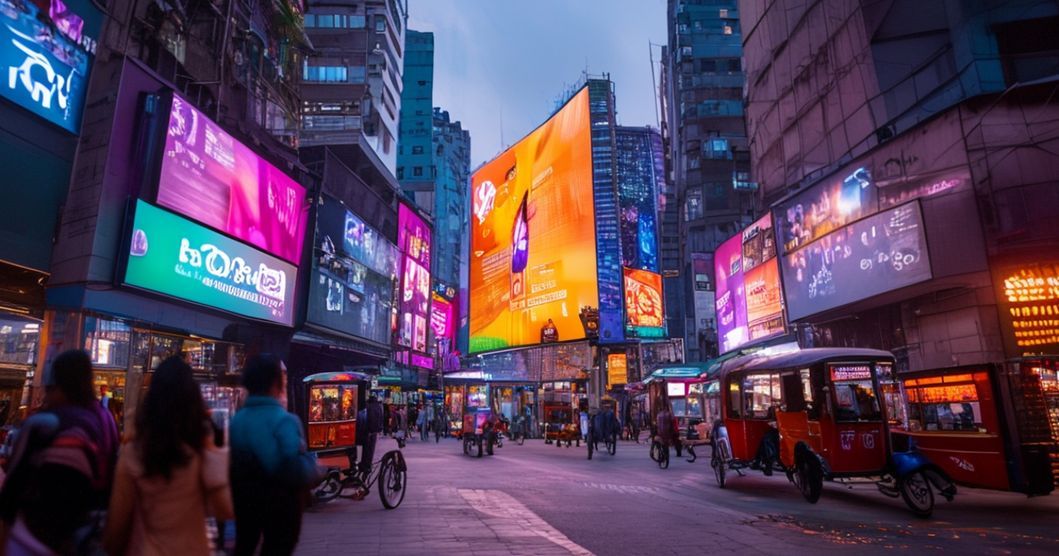
The advertising landscape in India is in a state of constant evolution, driven by technological advancements and an ever-increasing demand for measurable results. While digital advertising has dominated conversations for years, a quiet yet powerful revolution is reshaping the offline advertising space: Programmatic Digital Out-of-Home (pDOOH).
As of January 2026, pDOOH is no longer a nascent concept but a rapidly expanding segment of India's ad-tech industry, promising unparalleled efficiency, targeting precision, and accountability. This shift marks a significant leap from traditional, static billboards to dynamic, data-driven screen networks that captivate consumers in real-world environments.
Understanding the Programmatic DOOH Paradigm
At its core, Programmatic DOOH refers to the automated buying, selling, and delivery of ad inventory on digital screens located in public spaces. Think beyond large LED hoardings; this includes screens in malls, airports, railway stations, gyms, cafes, retail stores, and even local shops. Unlike traditional Out-of-Home (OOH) advertising, which involves manual negotiations and long-term contracts for fixed placements, pDOOH leverages automation and data analytics to optimize ad delivery in real time.
The process is similar to online programmatic advertising: advertisers use platforms to bid on ad slots, specify target audiences, locations, and timings, and then their ads are displayed to the right audience at the right moment. This transition from 'mass reach' to 'precise engagement' is what makes pDOOH a game-changer.
Why India is Ripe for the pDOOH Revolution
India, with its vast and diverse population, rapid urbanization, and growing digital infrastructure, presents a fertile ground for pDOOH expansion. Several factors contribute to its surging popularity:
- Increased Digital Screen Penetration: From metropolitan hubs to Tier-2 and Tier-3 cities, digital screens are becoming ubiquitous in commercial and public spaces.
- Data-Driven Marketing Imperative: Indian brands, accustomed to the detailed analytics of online campaigns, are demanding similar measurability and performance from their offline investments.
- Consumer Engagement: Modern Indian consumers are dynamic and expect relevant content. Programmatic DOOH offers the flexibility to tailor messages based on time of day, weather, events, or audience demographics.
- Growth of O2O (Online-to-Offline) Strategies: Businesses are increasingly looking for seamless ways to bridge the gap between digital discovery and physical purchase, and pDOOH acts as a crucial touchpoint.
- Startup Innovation: India's robust startup ecosystem is fostering homegrown ad-tech platforms that are building the infrastructure for this automated future.
Key Benefits for Indian Brands
The advantages of adopting pDOOH for marketing campaigns are manifold:
- Precision Targeting: Instead of broadcasting to everyone, brands can target specific demographics, interests, and behaviors based on location data, footfall analytics, and even contextual factors. A coffee brand can target screens near colleges in the morning, while a gym can target office areas during lunch breaks.
- Flexibility and Agility: Campaigns can be launched, paused, modified, or optimized in real-time, allowing brands to respond quickly to market changes, promotional needs, or inventory availability. This eliminates the rigidity of traditional OOH.
- Enhanced Measurability: This is perhaps the biggest draw. pDOOH platforms provide crucial metrics such as ad plays, estimated impressions, footfall attribution, and even engagement rates (via QR scans or interactive elements). This allows for a clear understanding of Return on Ad Spend (ROAS).
- Cost Efficiency: By automating the buying process and enabling precise targeting, brands can optimize their budgets, ensuring their ads reach the most relevant audience without unnecessary wastage.
- Contextual Relevance: Dynamic content delivery allows for ads that are highly relevant to the immediate environment or time, increasing engagement and recall.
Automation and Data Analytics: The Engine of pDOOH
It's vital to understand that the power of pDOOH stems from sophisticated automation and robust data analytics, not necessarily complex AI in ad delivery. Automation streamlines the entire workflow – from inventory management and ad serving to campaign reporting. This includes:
- Automated bidding processes for ad slots.
- Automated content scheduling and delivery to screens.
- Automated collection and aggregation of performance data.
Data analytics, on the other hand, provides the intelligence. It processes vast amounts of information – audience demographics, location data, footfall patterns, time-of-day traffic, and even past campaign performance – to inform targeting decisions, optimize pricing, and generate actionable insights. This synergy between automation and data ensures that offline ads are not just seen, but are seen by the right people at the right time, leading to measurable outcomes.
The Future is Automated and Measurable
As we look ahead, the trajectory of advertising in India points towards greater integration of technology, demanding transparency and tangible results from every marketing dollar spent. The days of 'spray and pray' advertising are rapidly fading, replaced by strategies that prioritize precision, engagement, and accountability.
Programmatic DOOH, driven by robust automation and intelligent data analytics, is at the forefront of this evolution, transforming how brands connect with consumers in the physical world. It empowers businesses of all sizes to leverage the power of offline presence with the intelligence and measurability once exclusive to digital channels. The future of advertising in India is undoubtedly offline, digital, automated, and supremely measurable.
As India's advertising landscape increasingly embraces automation and data for offline impact, platforms like Adsmunch are leading the charge. Adsmunch, India's first AUTOMATED hyperlocal offline advertising platform, embodies the principles of pDOOH by enabling brands to launch measurable ad campaigns on digital screens in commercial spaces across India within minutes. With real-time tracking, full metrics akin to online ads (plays, scans, CPA, CPI, CPM), and an affordable entry point, Adsmunch empowers businesses – from local shops to national brands – to engage consumers effectively, driving tangible results in the offline world. It’s a testament to how automation and smart data analytics are making offline advertising more accessible, efficient, and impactful than ever before, without relying on AI for ad delivery.