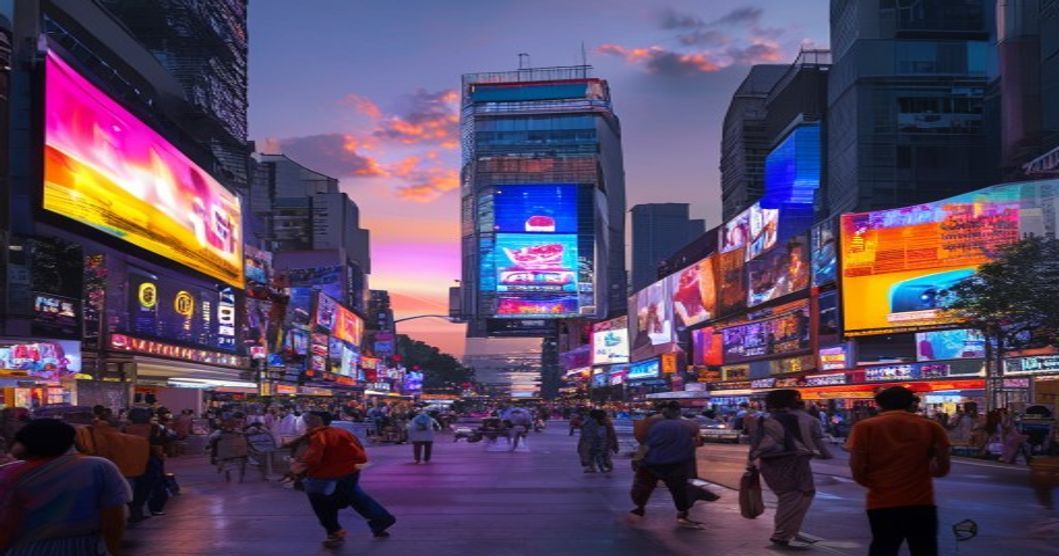
The advertising landscape in India is undergoing a profound transformation. While digital ads have long set the benchmark for precision and measurability, a quiet revolution has been brewing in the offline realm. Gone are the days when out-of-home (OOH) advertising was a blunt instrument, bought in bulk and measured by approximation. Today, the advent of Programmatic Digital Out-of-Home (pDOOH) is ushering in an era where offline ads are as dynamic, targeted, and measurable as their online counterparts, fundamentally reshaping how brands connect with Indian consumers.
India, with its vibrant urban centres, burgeoning digital infrastructure, and diverse consumer base, presents a fertile ground for ad-tech innovations. As smart cities expand and digital screens proliferate across commercial spaces, public transport hubs, and retail outlets, the opportunity to engage audiences in the physical world with unprecedented efficiency is becoming a reality. This shift isn't just about placing digital screens; it's about making those screens intelligent, responsive, and accountable.
What is Programmatic DOOH (pDOOH)?
At its core, pDOOH leverages automation and data to buy, sell, and deliver advertising content on digital screens in real-time. Think of it as programmatic advertising, but for the physical world. Instead of lengthy negotiations and static campaigns, pDOOH allows advertisers to bid for ad slots on individual screens or networks of screens, targeting specific audiences based on factors like location, time of day, weather, traffic patterns, and even proximity to points of interest. This means a brand can, for instance, display an ad for cold beverages on screens near a metro station only when the temperature crosses a certain threshold, or promote an umbrella brand only when it starts raining.
The technology integrates sophisticated algorithms and data analytics to optimize ad delivery, ensuring that the right message reaches the right audience at the right moment. This move from manual bookings to automated, data-driven transactions represents a monumental leap for offline advertising, transforming it from a static medium to a highly adaptable and responsive channel.
The Indian Context: Why pDOOH is a Game-Changer Here
India’s unique market dynamics make pDOOH particularly potent. The country's massive population, diverse linguistic landscape, and varying purchasing power across regions demand advertising strategies that are highly adaptable and localized. Traditional OOH often struggled with this, requiring extensive manual effort to tailor campaigns. pDOOH addresses these challenges head-on:
- Urbanisation and Digital Proliferation: Indian cities are rapidly digitising, with digital screens becoming ubiquitous in malls, airports, railway stations, bus shelters, cafes, and local shops. This expanding inventory of digital real estate forms the backbone of a robust pDOOH ecosystem.
- Data-Rich Environment: While privacy regulations are evolving, the sheer volume of anonymised location, demographic, and behavioural data available in India provides rich insights for precise targeting without compromising individual privacy.
- Growing Brand Awareness: As more Indian consumers become discerning and digitally savvy, brands are under pressure to create integrated, seamless experiences across online and offline touchpoints. pDOOH facilitates this omnichannel approach.
- Hyperlocal Focus: For local businesses and national brands aiming for hyperlocal penetration, pDOOH offers unparalleled granularity, allowing them to target specific neighbourhoods, streets, or even individual commercial establishments.
Key Benefits for Indian Advertisers
The shift to programmatic DOOH brings a host of advantages that were previously unattainable in offline advertising:
- Precision Targeting & Contextual Relevance: Advertisers can move beyond broad demographic targeting to pinpoint specific audiences based on real-time data. Imagine serving an ad for a coffee shop to office-goers during morning rush hour, or a gaming console ad to teenagers near an entertainment zone on a weekend afternoon.
- Real-time Optimization & Flexibility: Campaigns can be adjusted instantly based on performance metrics, environmental factors, or changing marketing objectives. This agility allows for dynamic pricing and content adjustments, maximizing campaign effectiveness.
- Measurable ROI: Perhaps the most significant benefit is the ability to measure campaign performance with greater accuracy. While direct clicks aren't possible, pDOOH platforms can track impressions, footfall attribution (connecting ad exposure to store visits), brand lift studies, and even QR code scans or app downloads initiated through the screens. This data-driven approach allows for clear ROI calculations, a crucial factor for budget-conscious Indian businesses.
- Efficiency and Automation: The programmatic nature reduces manual intervention, streamlining the buying process and freeing up marketing teams to focus on strategy rather than logistics.
- Omnichannel Integration: pDOOH bridges the gap between digital and physical, allowing for seamless integration with broader digital marketing strategies. A consumer seeing an ad on a DOOH screen might then receive a targeted ad on their mobile device later, creating a cohesive brand experience.
Overcoming Challenges: The Road Ahead for pDOOH in India
While promising, the full potential of pDOOH in India still requires addressing certain challenges. Standardisation of screen inventory and data metrics across different providers is crucial for seamless campaign execution. Data privacy, governed by evolving regulations like the Digital Personal Data Protection Act, will also dictate how targeting data can be utilized. Furthermore, educating advertisers and agencies about the capabilities and benefits of pDOOH is essential for wider adoption. However, the momentum behind this technology suggests these hurdles are surmountable.
The Future is Measurable: A New Era for Offline Advertising
The future of advertising in India is undeniably heading towards greater measurability, automation, and integration. Programmatic DOOH is a powerful testament to this trend, proving that offline touchpoints can be as sophisticated and effective as their digital counterparts. For brands operating in India's competitive market, leveraging such ad-tech innovations is not just an option, but a necessity to cut through the noise and deliver impactful campaigns.
As India's advertising landscape increasingly demands efficiency, precision, and measurability, platforms that truly bridge the gap between digital and physical spaces become invaluable. For businesses looking to harness the power of automated, data-driven offline advertising without the complexities of traditional approaches, Adsmunch stands at the forefront. As India's first automated hyperlocal offline advertising platform, Adsmunch empowers brands to launch campaigns in minutes on digital screens within real commercial spaces. By providing full metrics like plays, scans, CPA, CPI, and CPM, Adsmunch makes offline advertising as measurable as its online counterparts, ensuring that every rupee spent delivers tangible results and reach for Indian businesses, from MSMEs to large enterprises. With Adsmunch, the future of measurable, engaging, and automated offline advertising is already here.