The marketing landscape in India is in constant flux, a vibrant tapestry woven with threads of tradition, rapid digitalization, and evolving consumer expectations. By April 2026, the term 'phygital' isn't just a buzzword; it's the bedrock upon which successful brands are building their future. As India marches towards becoming a global economic powerhouse, its diverse consumer base demands experiences that transcend the traditional boundaries of online and offline.
Once seen as distinct realms, digital and physical are now converging, creating a powerful third space: the phygital experience. This synergy is not merely a trend; it's a strategic necessity for Indian businesses striving for deeper engagement, measurable impact, and sustained growth in a hyper-competitive market.
What Exactly is Phygital Marketing?
At its core, phygital marketing is about seamlessly blending the digital and physical worlds to create a cohesive, enriched, and intuitive customer journey. It's about leveraging the instant gratification and analytical prowess of digital channels to enhance the tangible, sensory, and often emotional connections forged in physical spaces. Think beyond just having a website for your brick-and-mortar store or sending an SMS after an in-store purchase.
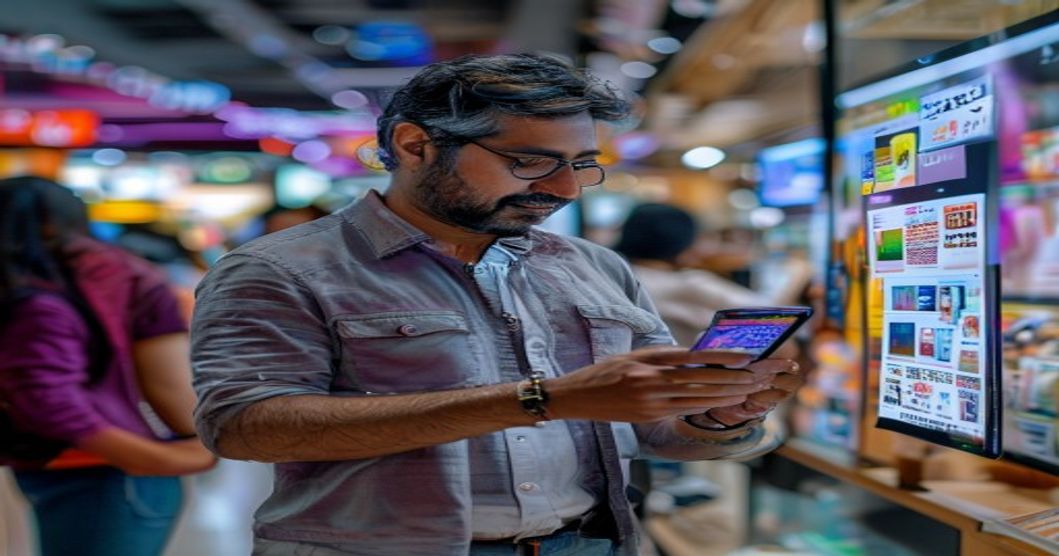
In 2026, phygital means empowering consumers to effortlessly move between online interactions and real-world experiences, often simultaneously. It’s about creating touchpoints where digital tools – like QR codes, augmented reality (AR) filters, interactive screens, or mobile apps – enhance the physical shopping, dining, or service experience, and vice-versa. The goal is to eliminate friction and elevate convenience, personalization, and engagement.
Why Phygital is the 2026 Imperative for Indian Brands
The Indian consumer of 2026 is digitally savvy, globally aware, yet deeply rooted in local experiences. They expect brands to understand their preferences across all touchpoints and offer consistent, high-quality interactions. Here's why phygital has become non-negotiable:
- Evolving Consumer Behavior: The pandemic accelerated digital adoption, but it also underscored the human need for physical interaction. Consumers now seek the convenience of online shopping combined with the sensory pleasure and trust of physical stores. Phygital caters to this hybrid behavior.
- Demand for Experiences: Modern consumers, particularly Gen Z and millennials, value experiences over mere transactions. Phygital marketing crafts immersive, memorable experiences that resonate deeper than standalone digital or physical campaigns.
- Data-Driven Personalization: By integrating digital interactions with physical touchpoints, brands can gather richer, more holistic data about customer behavior. This data fuels hyper-personalization, delivering relevant offers and content at the right time, in the right context.
- Competitive Edge: Brands that master phygital strategies stand out. They build stronger brand loyalty, reduce customer churn, and create a unique value proposition that is hard for competitors to replicate through traditional methods alone.
- Bridging the Rural-Urban Divide: India's vast and diverse landscape means marketing strategies must cater to varying levels of digital literacy and access. Phygital approaches, leveraging simple QR codes or interactive screens in local shops, can effectively reach consumers in tier 2 and tier 3 cities, blending familiar physical spaces with accessible digital engagement.
The Pillars of an Effective Phygital Strategy
Building a robust phygital presence requires a strategic approach focusing on several key areas:
- Seamless Customer Journey Mapping: Brands must meticulously map out the entire customer journey, identifying every touchpoint where digital and physical can intersect. This involves ensuring consistent branding, messaging, and user experience whether a customer is browsing online, visiting a store, or engaging with an ad on a screen in a cafe.
- Data Integration and Analytics: The power of phygital lies in unified data. Integrating data from online sales, app interactions, in-store footfall, loyalty programs, and even digital screen engagement provides a 360-degree view of the customer. Advanced analytics, using automation and smart pricing models (without relying on AI for ad delivery/targeting), can then extract actionable insights to refine strategies.
- Interactive Offline Experiences: The physical space becomes a stage for digital engagement. This can include interactive digital screens displaying personalized offers, QR codes linking to loyalty programs or games, augmented reality mirrors in retail, or smart vending machines. The key is to make the physical environment dynamic and responsive to individual consumers.
- Digital-to-Physical (D2P) and Physical-to-Digital (P2D) Flows: Brands need to create clear pathways. D2P examples include online 'click-and-collect' services, online bookings for in-store experiences, or digital ads promoting in-store events. P2D examples involve scanning a QR code in a store to access exclusive online content, signing up for a newsletter via a digital kiosk, or participating in a digital game on an in-store screen to win online coupons.
- Local Relevance: For a country as diverse as India, local relevance is paramount. Phygital strategies allow for hyper-local customization of content, offers, and experiences, making them more resonant with specific communities and regional preferences.
Indian Success Stories & Opportunities
By 2026, several Indian brands are already demonstrating the power of phygital. Retailers are using interactive digital displays to showcase extended product lines unavailable in-store, allowing customers to order directly to their homes. Food and beverage chains are deploying QR code-based menus that allow for seamless ordering and payment, often coupled with loyalty points and personalized promotions. Salons and gyms are integrating online booking systems with in-store digital screens that display service menus, customer testimonials, and even fitness challenges, offering rewards for participation.
The opportunity for MSMEs and startups is particularly significant. Phygital levels the playing field, allowing smaller businesses to offer sophisticated, engaging experiences without massive infrastructure investments. A local boutique can use social media to drive traffic to its physical store for an exclusive preview, while a café can use an in-store digital screen to run a 'spin-the-wheel' game for a discount on their next online order, integrating their digital and physical loyalty programs.
Navigating the Phygital Landscape: Challenges & Solutions
While the promise of phygital is immense, challenges exist. Integrating disparate digital and physical systems can be complex. Ensuring a consistent brand experience across all touchpoints requires meticulous planning and execution. Training staff to facilitate phygital interactions is also crucial. However, the benefits – enhanced customer loyalty, richer data, and a distinct competitive advantage – far outweigh these initial hurdles.
The key is to start small, experiment with different phygital elements, and continuously gather feedback. Focus on creating value for the consumer at every interaction, making their journey smoother, more engaging, and more rewarding.
Conclusion: Embracing the Phygital Future of Indian Marketing
As Indian consumers increasingly seek blended experiences, the need for marketing solutions that bridge the digital and physical divide becomes paramount. The phygital era demands innovation that offers both the tangibility of real-world interactions and the measurable efficiency of digital. For businesses looking to engage audiences directly within their daily routines, combining the measurability of digital with the immediate impact of offline, platforms like Adsmunch are proving to be invaluable.
Adsmunch, India's first AUTOMATED hyperlocal offline advertising platform, empowers brands to launch measurable ad campaigns on digital screens in real physical commercial spaces such as shops, cafes, gyms, and salons. Leveraging automation and data analytics (not AI for ad delivery), Adsmunch provides full metrics akin to online ads – plays, scans, CPA, CPI, CPM – making offline advertising truly measurable and effective for the phygital era. It's about delivering engaging, reward-driven experiences to consumers through QR scan games, coupons, and spin-to-win contests, while offering brands an affordable, trackable way to build local presence and connect with their target audience in the real world. Adsmunch truly embodies the phygital future, offering a 100% Indian platform built for Indian businesses to thrive in this exciting, interconnected marketing landscape.