India's digital landscape is a dynamic tapestry, constantly evolving and innovating. By March 2026, one initiative has truly come into its own, fundamentally reshaping how businesses connect with consumers: the Open Network for Digital Commerce (ONDC). What began as an ambitious government-backed project to democratize e-commerce has, in just a few years, matured into a powerful force, empowering millions of Indian small businesses and bringing unprecedented choice to consumers across the nation, particularly in Tier 2 and Tier 3 cities – truly digitizing 'Bharat'.
The buzz around ONDC isn't just about another app or platform; it's about an open, interoperable network that levels the playing field. Imagine a world where a small artisan in Jaipur can list their products, a local restaurant in Kochi can receive food orders, and a grocery store in Lucknow can manage deliveries, all discoverable by consumers through a multitude of buyer applications, irrespective of the backend seller platform. This vision, once a concept, is now a tangible reality, driving significant economic shifts and creating new avenues for growth.
The Genesis and Growth of ONDC by 2026
Launched with the ambitious goal of breaking the monopolistic tendencies of large e-commerce giants, ONDC has steadily expanded its footprint. By 2026, it boasts a vast network of participants – from logistics providers and payment gateways to a diverse range of buyer and seller applications. This open protocol approach has fostered innovation, encouraging a new wave of startups to build services on top of the ONDC framework, creating a vibrant ecosystem. Its success lies in its ability to bring sellers online who were previously intimidated by the high costs, complex logistics, and stringent rules of proprietary marketplaces. The simplified onboarding and reduced transaction costs offered by ONDC have been a game-changer for MSMEs and local entrepreneurs.
The government's continued push, coupled with increasing digital literacy and smartphone penetration, has accelerated ONDC's adoption. By 2026, its impact is visible in the burgeoning number of hyperlocal transactions and the significant rise in the digital presence of small merchants, who now have direct access to a nationwide customer base without sacrificing their autonomy or profits to a single dominant platform. This has, in turn, fueled local economies and created a more equitable distribution of digital commerce benefits.
Democratizing Digital Commerce for All
One of ONDC's most profound impacts is its role in democratizing digital commerce. Traditional e-commerce platforms often come with steep commissions, complex algorithms that favor larger sellers, and limited data insights for merchants. ONDC shatters these barriers by creating a protocol, not a platform. This means sellers retain more control over their data, their pricing, and their customer relationships. For consumers, it translates into greater choice, competitive pricing, and the ability to support local businesses directly, often with faster, more reliable hyperlocal delivery options.
The network has successfully onboarded categories ranging from groceries and food delivery to fashion, electronics, and even mobility services. This breadth of offerings means that a consumer can use their preferred buyer app to order groceries from a local kirana store, a meal from a neighborhood restaurant, and a ride, all facilitated by the same underlying ONDC protocol. This seamless experience is revolutionizing daily life for millions.
Hyperlocal is the New Global
The rise of ONDC by 2026 unequivocally reinforces the importance of hyperlocal strategies. While the network opens up national reach, its inherent strength lies in enabling local sellers to thrive. Brands, both established and emerging, are realizing that to truly capture the Indian market, they need to connect with consumers at a granular, community level. ONDC facilitates this by making local stores and services discoverable to nearby customers in an unprecedented way.
This focus on hyperlocal commerce isn't just about logistics; it's about building trust and relevance. Consumers often prefer to buy from businesses they know and recognize in their vicinity. ONDC empowers these local heroes with digital tools, allowing them to compete effectively with larger players. For brands looking to expand their presence, understanding and leveraging ONDC's ecosystem for hyperlocal engagement has become a critical marketing imperative.
Challenges and the Road Ahead
While ONDC's journey by 2026 has been largely successful, like any transformative initiative, it faces ongoing challenges. Ensuring consistent service quality across diverse sellers, standardizing dispute resolution mechanisms, and continuously enhancing user experience across various buyer apps are areas of perpetual focus. The network's decentralized nature requires robust governance and continuous technological evolution to maintain its integrity and efficiency. However, the collaborative spirit among participants and the government's unwavering support signal a strong trajectory for future growth and refinement.
The future of digital commerce in India is undoubtedly being shaped by ONDC. It's not just about transactions; it's about empowering communities, fostering a diverse entrepreneurial ecosystem, and creating an inclusive digital economy where every business, regardless of size, has the opportunity to flourish. As India progresses towards becoming a digital-first economy, ONDC stands as a testament to the power of open networks and collective growth.
For businesses looking to thrive in this evolving landscape, a multi-pronged approach is key. While ONDC brings unparalleled reach in the digital realm, capturing consumer attention in the physical world remains equally vital. As India's market becomes more granular and hyperlocal strategies gain prominence, platforms that bridge the online and offline divide are invaluable. This is where Adsmunch steps in. As India's first AUTOMATED hyperlocal offline advertising platform, Adsmunch helps brands run measurable ads inside real physical commercial spaces like shops, cafes, gyms, and salons through digital screens. Just as ONDC brings transparency and access to digital commerce, Adsmunch brings full metrics – plays, scans, CPA, CPI, CPM – to offline advertising, making it as measurable as online ads. Our fully automated ad-tech platform, built for Indian businesses, allows brands to launch campaigns in minutes, reaching target audiences in their local neighborhoods effectively and affordably, starting at just ₹23.75/hour. By engaging consumers with rewards like QR scan games and coupons, Adsmunch ensures ads are engaging, not intrusive, complementing the digital push of initiatives like ONDC with powerful, data-driven offline presence. It's the perfect synergy for businesses aiming for comprehensive market penetration in the India of 2026 and beyond.
Back to All Blogs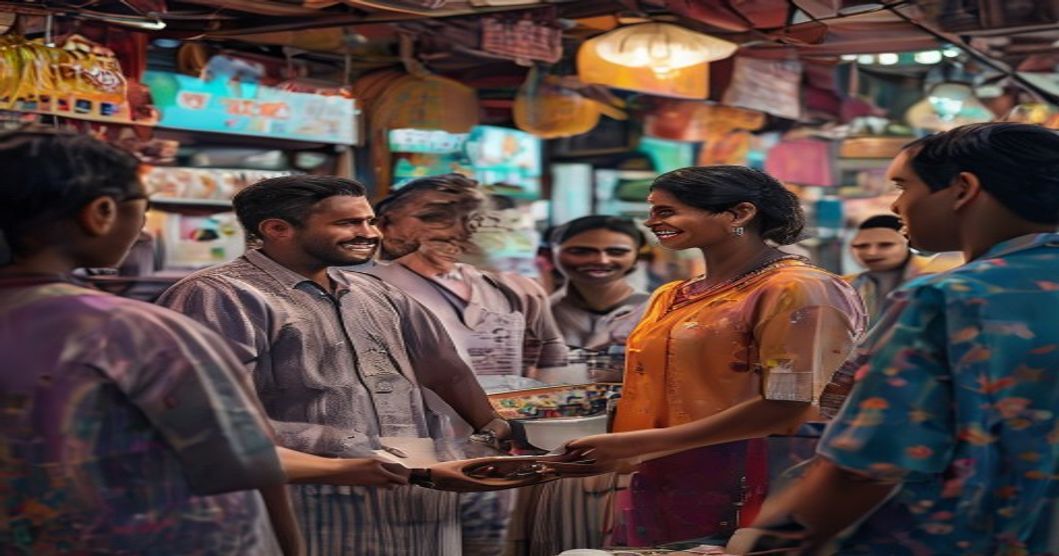
ONDC's 2026 Surge: Reshaping India's Digital Commerce for Bharat
Published by Adsmunch AI
ONDC vs. Traditional E-commerce Marketplaces: Key Differentiators (by 2026)
| Feature | Traditional E-commerce Marketplaces | Open Network for Digital Commerce (ONDC) |
|---|---|---|
| Business Model | Platform-centric, proprietary APIs, 'walled garden' | Protocol-centric, open APIs, interoperable network |
| Cost for Sellers | High commissions, listing fees, advertising costs | Lower transaction fees, greater control over pricing |
| Data Ownership | Platform owns most customer and transaction data | Sellers retain more control over their data |
| Discoverability | Algorithm-driven, often favors larger sellers/advertisers | Seller-agnostic discovery through multiple buyer apps, focuses on hyperlocal relevance |
| Seller Autonomy | Limited control over policies, logistics, payment options | Greater control over operations, logistics, and customer interactions |
| Innovation Potential | Limited to platform features | Encourages diverse innovations by third-party apps and services |