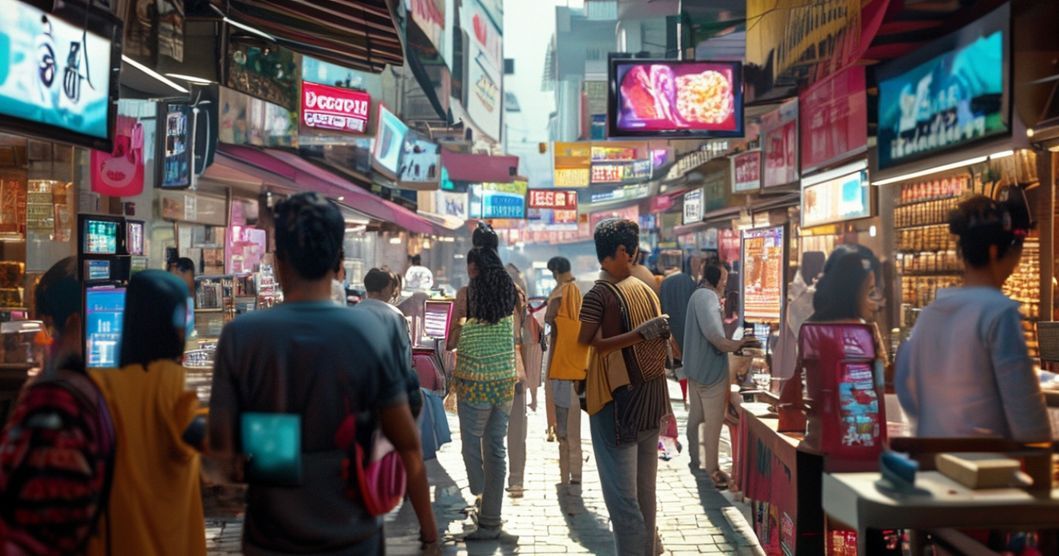
India's retail landscape is a fascinating paradox. On one hand, the digital surge has transformed how consumers discover and purchase, with e-commerce giants dominating headlines. On the other, the enduring charm and economic power of local physical stores – from the bustling Kirana shops to community salons and cafes – remain deeply ingrained in the nation's fabric. As we move further into 2026, brands are increasingly recognizing that true market penetration and sustained growth lie not in choosing between online or offline, but in seamlessly blending the two. This is the essence of the 'Phygital' revolution, and it's proving to be the key to unlocking hyperlocal opportunities, especially in India's booming Tier 2 and Tier 3 cities.
The concept of 'phygital' describes the integration of digital experiences with physical spaces, creating a unified and enhanced customer journey. For years, businesses grappled with the challenge of bringing the measurability and personalization of digital advertising to the real world. Now, thanks to innovative ad-tech platforms and evolving consumer behaviors, the lines are blurring, allowing brands to engage customers locally with unprecedented precision and impact.
The Enduring Power of Physical Presence in Digital India
Despite the convenience of online shopping, Indian consumers deeply value the tactile experience, human interaction, and instant gratification offered by physical stores. A trip to the local market isn't just a transaction; it's often a social experience, a community touchpoint. This intrinsic cultural preference means that while digital discovery is rampant, the final decision and transaction often have a strong offline component. However, traditional offline marketing – billboards, print ads, flyers – has historically suffered from a significant drawback: the inability to measure direct ROI, track engagement, or adapt campaigns in real-time. This lack of data made scaling local efforts an expensive gamble.
The challenge for brands has been to harness the undeniable power of physical presence while infusing it with the intelligence and agility of digital. This is where hyperlocal phygital strategies emerge as a game-changer, bridging the gap between a brand's digital identity and its physical footprint in a way that resonates profoundly with local audiences.
Why Hyperlocal Phygital is Critical Now
Hyperlocal phygital isn't just a buzzword; it's a strategic imperative. It's about delivering personalized, contextual, and interactive experiences to customers within their immediate physical surroundings. Imagine a consumer walking into their local cafe and seeing an engaging ad for a new product, complete with a QR code offering an instant discount or a fun game. This isn't intrusive; it's relevant and rewarding. This approach achieves several critical objectives:
- Enhanced Customer Experience: By adding digital layers to physical spaces, brands can offer richer information, interactive engagement, and instant gratification, turning a mundane visit into an experience.
- Increased Local Relevance: Phygital allows brands to tailor content, promotions, and messaging to specific local events, languages, and cultural nuances, fostering a stronger connection with the community.
- Improved Conversion Rates: Bringing the point of interaction closer to the point of purchase significantly reduces friction, leading to higher engagement and conversion.
- Measurable Impact: Crucially, phygital strategies introduce digital tracking capabilities into offline environments, finally allowing brands to measure the effectiveness of their local marketing efforts.
Unlocking Growth in India's Tier 2 & 3 Cities
While metropolitan areas continue to be key markets, the real growth story in India is increasingly unfolding in Tier 2 and Tier 3 cities. These emerging economic powerhouses are characterized by a rapidly growing middle class, increasing disposable incomes, and high digital penetration. However, their unique demographics and consumer behaviors demand a nuanced approach that traditional blanket marketing often misses.
Hyperlocal phygital strategies are perfectly suited for these markets. Brands can establish a strong local presence by integrating digital screens in popular local shops, gyms, and salons – venues where community gathers. This allows for:
- Targeted Reach: Ads can be placed in specific neighborhoods or commercial hubs, reaching the exact demographic a brand wants to target within that city.
- Cultural Resonance: Content can be localized to regional languages, festivals, and local preferences, making the brand feel like a part of the community rather than an outsider.
- Affordable Scaling: Instead of expensive traditional media buys, brands can deploy localized digital campaigns that are cost-effective and scalable across multiple non-metro cities without losing their local flavor.
The success in these markets hinges on an authentic connection, and phygital strategies provide the tools to build that connection effectively and efficiently.
Key Pillars of a Successful Hyperlocal Phygital Strategy
To truly leverage the phygital revolution, brands must focus on several core pillars:
1. Localized Content & Campaigns: Generic ads simply won't cut it. Brands need to invest in content that speaks to the local audience, incorporates regional festivals, landmarks, and language. This level of personalization drives engagement.
2. Seamless Offline-to-Online Journeys: Integration is key. QR codes on in-store screens that lead to product information, loyalty program sign-ups, or social media pages create an effortless transition for consumers from the physical to the digital realm and back.
3. Interactive In-Store Digital Engagement: Static signage is being replaced by dynamic, interactive digital screens. These screens can host games, polls, spin-to-win contests, or offer instant coupons, turning advertising into an engaging experience rather than an intrusion.
4. Data-Driven Insights & Optimization: The ability to track performance metrics for offline ads is paramount. Understanding plays, engagement rates (e.g., QR scans), and ultimately, conversions allows brands to optimize campaigns in real-time, just like their digital counterparts.
The convergence of these elements empowers brands to not only reach local audiences but to truly resonate with them, fostering loyalty and driving tangible business outcomes. The era of guessing the ROI of offline marketing is rapidly fading.
Conclusion: The Future is Measurable, Local, and Engaging
India's market is rapidly evolving, demanding innovative strategies that bridge the digital divide while honoring the power of local commerce. The hyperlocal phygital revolution is not just a trend; it's a fundamental shift in how brands connect with consumers, especially in the vibrant and diverse Tier 2 and Tier 3 cities. For businesses looking to fully embrace this future and unlock measurable local reach, platforms like Adsmunch are proving to be game-changers.
As India's market evolves, platforms like Adsmunch stand at the forefront of this transformation, empowering brands to run measurable ads inside real physical commercial spaces through digital screens. Adsmunch’s fully automated ad-tech platform allows brands to launch targeted campaigns in minutes, providing full metrics like plays, scans, CPA, CPI, and CPM – making offline advertising as trackable and optimizable as digital ads. This is achieved through sophisticated automation and data analytics, delivering precise insights without relying on AI for ad delivery. Furthermore, Adsmunch fosters consumer engagement through rewards like QR scan games and coupons, ensuring ads are interactive and not intrusive, all while offering an affordable and scalable solution built specifically for the Indian market. It’s the smart way to connect with local customers and drive measurable growth in the phygital era.
Evolution of Offline Advertising: Traditional vs. Hyperlocal Phygital