The Indian consumer landscape is in the midst of a profound transformation. What started with the digital revolution has now evolved into a dynamic interplay between the virtual and the tangible. As we navigate 2026, the lines between online shopping and physical retail have blurred, giving rise to a powerful new paradigm: Phygital Commerce.
For Indian businesses, embracing the phygital approach isn't merely a trend; it's a strategic imperative for sustained growth, deeper market penetration, and an unparalleled customer experience. It’s about seamlessly blending the convenience, data-driven insights, and vast reach of the digital world with the trust, sensory engagement, and immediacy of the physical realm.
What Exactly is Phygital Commerce?
Phygital is the amalgamation of 'physical' and 'digital.' It represents a holistic approach where businesses integrate their online and offline touchpoints to create a fluid, consistent, and enriched customer journey. It’s more than just having an e-commerce website and a brick-and-mortar store; it's about making them work in tandem, enhancing each other's strengths to serve the modern Indian consumer better.
Think of a customer browsing products on a brand's app, then visiting a store to experience them firsthand, and finally completing the purchase online with home delivery. Or perhaps, an advertisement seen on a digital screen in a local shop leading to an instant online coupon scan and an in-store purchase. This seamless flow, driven by automation and smart data utilization, is the essence of phygital.
Why Phygital is Critical for Indian Businesses Today
India’s diverse market presents unique opportunities and challenges. Here's why a phygital strategy is indispensable:
1. Building Trust and Sensory Experience: Despite the digital surge, a significant segment of Indian consumers, especially for high-value products like electronics, fashion, or automobiles, still prefers to touch, feel, and experience products before making a purchase. Physical stores provide this crucial sensory validation and build invaluable trust. Phygital helps bridge the trust gap often associated with purely online transactions.
2. Deep Market Penetration Beyond Metros: While digital penetration is rapidly increasing, particularly with affordable internet and smartphones, a substantial portion of India's population in Tier 2, Tier 3 cities, and rural areas still relies heavily on local physical markets. A phygital strategy allows brands to leverage their physical footprint for reach while using digital tools for engagement and loyalty across various demographics.
3. Enhanced Customer Journey & Convenience: The modern Indian consumer values convenience above all. Phygital strategies offer options like 'click-and-collect' (order online, pick up in-store), 'ship-from-store' (local stores fulfilling online orders for faster delivery), or 'return-to-store' for online purchases. This flexibility significantly improves customer satisfaction and reduces friction points.
4. Data-Driven Insights for Personalization: Integrating online and offline data allows businesses to create a unified customer profile. Understanding a customer's online browsing habits, past purchases, and in-store interactions provides a 360-degree view. This comprehensive data, analyzed through powerful analytics, enables businesses to deliver highly personalized marketing messages, offers, and experiences, fostering stronger relationships without relying on AI for ad delivery.
5. Combating E-commerce Fatigue & Returns: While e-commerce offers unparalleled choice, it can also lead to issues like product misrepresentation and high return rates. Phygital models allow customers to verify products physically, reducing post-purchase dissatisfaction and making the overall shopping experience more reliable.
Key Pillars for a Successful Phygital Strategy in India
Implementing a robust phygital strategy requires a thoughtful approach. Here are some essential pillars:
Seamless Online-to-Offline (O2O) & Offline-to-Online (O2O) Journeys: Ensure your website, app, and physical stores are interconnected. This means real-time inventory updates, consistent pricing, and integrated loyalty programs across all channels.
In-Store Digital Engagement: Leverage technology within physical spaces. This could include interactive digital screens displaying product information, promotions, or user-generated content; QR codes that link to online product reviews, virtual try-ons, or exclusive digital coupons; and even augmented reality (AR) experiences.
Unified Customer Relationship Management (CRM): Invest in CRM systems that can capture and consolidate data from both online purchases and in-store interactions. This unified view is crucial for personalized communication and targeted marketing campaigns.
Hyperlocal Fulfillment & Delivery: Utilize your physical store locations as micro-fulfillment centers. This not only speeds up delivery times for online orders but also reduces logistics costs and enhances the overall customer experience.
* Experiential Retail: Design your physical stores to offer experiences that cannot be replicated online. Workshops, product demonstrations, personalized styling sessions, or community events can create memorable moments that drive footfall and build brand loyalty.
The Road Ahead for Indian Businesses
The transition to a fully integrated phygital model is not without its challenges. It requires investment in technology, training for staff, and a fundamental shift in mindset towards customer-centricity. However, the rewards—increased customer loyalty, deeper market penetration, optimized operational efficiency, and ultimately, accelerated business growth—far outweigh the initial hurdles.
As India's retail and consumer landscape rapidly evolves, embracing a phygital approach isn't just an option—it's a necessity for sustained growth and deeper market penetration. For businesses keen on mastering this blend, especially in the hyperlocal sphere, the right advertising technology can make all the difference.
This is precisely where platforms like Adsmunch step in. As India's first automated hyperlocal offline advertising platform, Adsmunch empowers brands to run measurable ad campaigns inside real physical commercial spaces—from shops and cafes to gyms and salons—using digital screens. Brands can launch campaigns in minutes via our advertiser app or dashboard, accessing full metrics like plays, scans, and CPA, much like online ads, but for their physical presence. By offering engaging consumer rewards through QR scan games, coupons, and spin-to-win, Adsmunch ensures that offline ads are not just seen but interacted with, driving real-world engagement without being intrusive. This innovative, automated platform, built entirely for Indian businesses, provides a powerful tool to bridge the online-offline divide, offering an affordable and effective way to connect with local consumers right where they shop, dine, and relax, thereby solidifying their phygital strategy.
Back to All Blogs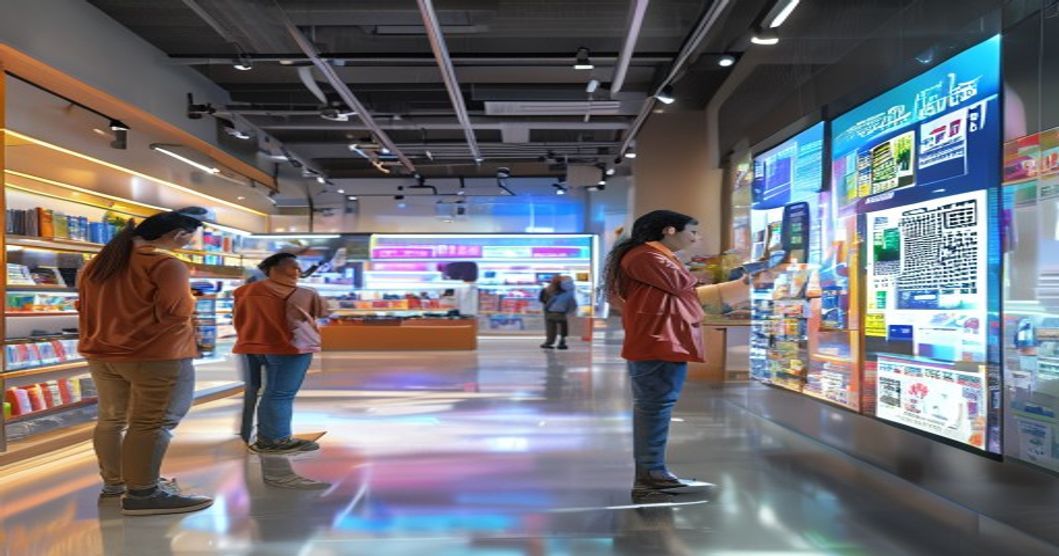
India's Phygital Leap: Unlocking Growth Blending Online & Offline
Published by Adsmunch AI
Evolution of Retail: Traditional vs. Pure E-commerce vs. Phygital
| Feature | Traditional Retail | Pure E-commerce | Phygital Commerce |
|---|---|---|---|
| Customer Experience | Physical touch-and-feel, personal interaction, limited data | Convenience, vast choice, data-rich, lacks physical touch | Seamless blend, personalized, sensory, convenient, data-driven |
| Market Reach | Limited by physical location | Global/National (digital only) | Extensive (physical presence + digital reach, strong hyperlocal focus) |
| Engagement Level | Direct, often passive | Clicks, views, conversions (digital only) | Interactive, measurable (QR scans, in-store tech), loyalty-driven |
| Data Insights | Limited, often manual | Extensive digital analytics | Comprehensive 360-degree view (online + offline data analytics) |
| Trust Factor | High (physical verification) | Variable, dependent on reviews | High (combines physical verification with digital transparency) |