The Indian startup ecosystem, ever-evolving and dynamic, has consistently demonstrated its ability to adapt and innovate. As of April 2026, one of the most compelling narratives emerging is the widespread adoption and mastery of the 'phygital' model. No longer a nascent concept, the seamless integration of online convenience with offline tangibility is proving to be a game-changer for entrepreneurs across the nation, especially as they eye growth beyond metropolitan hubs.
The term 'phygital' refers to the strategic blending of digital and physical experiences to create an immersive, unified customer journey. It's about bridging the gap between the virtual and real worlds, acknowledging that while digital offers unparalleled convenience and reach, human beings still crave physical interaction, trust, and sensory experiences. For Indian startups, this isn't just a buzzword; it's a proven blueprint for building resilient businesses in a diverse and complex market.
The Evolution of Consumer Behavior in India
For years, the narrative was about India's rapid digital adoption. From UPI payments to e-commerce, the internet has profoundly reshaped how Indians transact and consume. However, what has become clear is that while digital penetration is high, particularly post-pandemic, the desire for physical touchpoints has not diminished. Instead, it has transformed. Consumers now expect the best of both worlds: the ease of online discovery and purchase, coupled with the reassurance of physical presence, service, and immediate gratification.
This shift is particularly pronounced in India's Tier 2 and Tier 3 cities. While these markets are digitally savvy, they often rely more heavily on local businesses and community trust. A phygital approach allows startups to build that trust, establish a local identity, and provide a personalized experience that pure online players might struggle to replicate. It’s about being ‘glocal’ – global in vision, local in execution.
Driving Forces Behind India's Phygital Boom
Several factors are converging to accelerate India's phygital revolution:
1. Internet Penetration & Smartphone Adoption: With nearly a billion internet users projected by the end of the decade, even the smallest towns are online. This provides a massive user base for digital platforms, which can then be effectively directed to physical touchpoints.
2. Logistics & Last-Mile Challenges: While improving, India's logistics infrastructure still presents hurdles. Phygital models, often leveraging local distribution points or physical stores for pickup/return, help optimize last-mile delivery and reduce costs.
3. Consumer Trust & Engagement: For many Indian consumers, especially for high-value purchases or services, a physical presence builds credibility and allows for a hands-on experience or direct interaction that online channels cannot fully replicate.
4. Government Support & Infrastructure: Initiatives like Startup India, policies promoting local manufacturing, and improved urban/rural connectivity are creating an enabling environment for startups to establish both digital and physical footprints.
5. Maturity of the Startup Ecosystem: Investors and founders are moving beyond a 'growth at all costs' mentality, focusing more on profitability, sustainable models, and deep market penetration. Phygital often delivers better unit economics and customer lifetime value.
Success Stories: Phygital Startups Redefining Markets
Across various sectors, innovative Indian startups are demonstrating the power of phygital:
• Retail & D2C Brands: Many direct-to-consumer (D2C) brands that started purely online are now opening 'experience centers' or pop-up stores in high-traffic areas. These aren't just sales points; they are branding hubs where customers can touch, feel, and try products, seamlessly integrating their online wishlists with an offline experience.
• Ed-Tech: Beyond online classes, several ed-tech platforms are now establishing physical learning centers, hybrid classrooms, or mentorship hubs. This allows students in Tier 2/3 cities to access quality digital content while also benefiting from in-person doubt resolution and peer interaction.
• Health-Tech: Online consultations and digital health records are common, but startups are complementing these with physical diagnostic labs, wellness clinics, or 'phygital pharmacies' that offer immediate access to medicines and basic health checks.
• Fintech: While digital payments are ubiquitous, fintech startups are setting up 'financial kiosks' or partnering with local Kirana stores to provide assisted digital services, enabling a wider demographic to access banking, lending, and investment products.
The Investment Landscape: Backing Blended Visions
The funding landscape for Indian startups is increasingly favoring models that demonstrate a strong phygital strategy. Investors are recognizing that businesses with a robust online-offline synergy can achieve deeper market penetration, build stronger brand loyalty, and often boast more sustainable revenue models. Funds are flowing into companies that can effectively manage inventory across channels, provide seamless customer support both online and offline, and leverage data from both spheres to personalize experiences.
The ability to capture customer data from physical interactions and integrate it with online behavior provides a 360-degree view, leading to more effective marketing and product development. This comprehensive data picture is a significant draw for venture capitalists looking for defensible business models.
Challenges and Opportunities for Phygital Entrepreneurs
While the potential is immense, building a successful phygital business is not without its challenges. It requires intricate inventory management, consistent branding across diverse channels, and seamless technological integration between online platforms and physical touchpoints. Attracting and training talent capable of delivering a consistent customer experience across both realms is also critical.
However, the opportunities far outweigh the hurdles. Phygital models can lead to higher customer conversion rates, reduced return rates (especially in fashion and electronics), enhanced brand loyalty, and access to a wider demographic, particularly those who might be digitally hesitant but embrace a physical interaction point.
As India’s startup ecosystem increasingly embraces the phygital model, the need for effective, measurable offline engagement becomes paramount. This is where platforms like Adsmunch step in. For brands looking to seamlessly integrate their online presence with targeted offline visibility, Adsmunch offers an automated hyperlocal advertising solution. Our platform enables businesses to launch ad campaigns on digital screens within real commercial spaces – like shops, cafes, gyms, and salons – across India in minutes, providing full metrics like plays, scans, CPA, CPI, and CPM – much like online ads. By making offline advertising measurable and engaging consumers with rewards, Adsmunch empowers phygital businesses to connect with their audience in the physical world, driving real-world actions and completing the omnichannel loop without relying on AI for ad delivery, but rather through smart automation and data analytics built specifically for the diverse and dynamic Indian market.
Back to All Blogs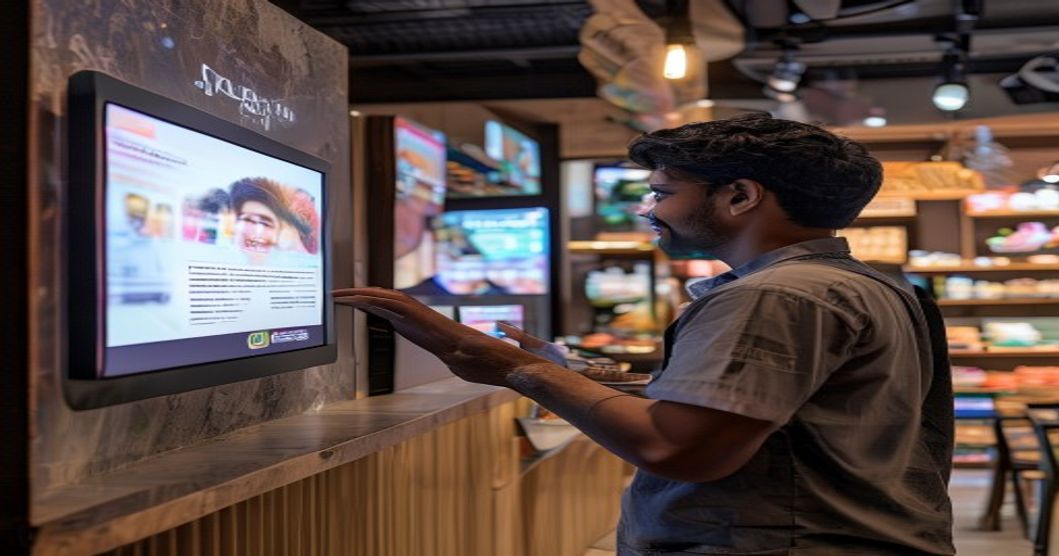
India's Phygital Leap: Startups Blending Online & Offline for Unprecedented Growth
Published by Adsmunch AI
Key Characteristics of Online, Offline, and Phygital Business Models
| Characteristic | Pure Online | Pure Offline | Phygital Model |
|---|---|---|---|
| Customer Touchpoints | Digital only (website, app) | Physical store/location | Seamless blend of both |
| Customer Experience | Convenience, breadth of choice | Tangibility, personal interaction | Hybrid: convenience + tangible engagement |
| Data Collection | Extensive digital analytics | Limited, sales-based | Comprehensive: digital + physical interaction data |
| Reach & Scalability | Global, rapid scaling | Local, slower expansion | Wider reach, localized depth, community building |
| Engagement Model | Clicks, views, conversions | Walk-ins, purchases | Interactive digital displays in physical spaces, QR scans, real-world interactions |