The Resurgence of Local: D2C Brands Eyeing India's Heartland
The Indian business landscape continues its dynamic evolution, and as of July 2026, one of the most compelling narratives is the aggressive expansion of Direct-to-Consumer (D2C) brands into India's vibrant Tier 2 and Tier 3 cities. While digital-first strategies initially propelled D2C brands to prominence in metropolitan areas, recent trends and significant funding rounds indicate a strategic pivot towards deeper market penetration, driven by evolving consumer behaviour and robust economic growth outside traditional metros. This shift isn't just a trend; it's a structural transformation redefining retail and brand engagement across the nation.
Major funding announcements over the past year have consistently highlighted D2C brands that demonstrate strong omnichannel strategies and a clear roadmap for hyperlocal expansion. Investors are increasingly backing ventures that can bridge the digital-physical divide, acknowledging that for sustained growth in India, a presence beyond the online storefront is crucial. This move is not merely about setting up physical stores; it's about creating integrated consumer experiences that resonate with local sensibilities and purchasing patterns.
Why the Hyperlocal Focus? Untapping the Next Billion Consumers
The impetus behind this hyperlocal thrust is multifaceted. Firstly, internet penetration in Tier 2 and Tier 3 cities has skyrocketed, creating a massive new cohort of online-savvy consumers. These consumers, armed with smartphones and disposable incomes, are eager for quality products and aspirational brands that were previously inaccessible. However, while they discover brands online, trust and conversion often strengthen with a tangible, local presence.
Secondly, logistical efficiencies have improved dramatically, making it easier for brands to distribute products to these regions. The growth of robust last-mile delivery networks and fulfillment centers has significantly reduced operational complexities, allowing D2C players to serve a wider geographical area effectively. This infrastructure development is a game-changer, leveling the playing field for smaller brands to compete with established giants.
Thirdly, the 'experience economy' is no longer exclusive to metros. Consumers in smaller cities are equally demanding engaging brand interactions. They seek not just products, but stories, community, and personalized service. This has led to an explosion of innovative 'phygital' models – a blend of physical and digital experiences – where D2C brands are experimenting with pop-up stores, experience centers, and localized marketing campaigns that speak directly to the community.
The 'Phygital' Playbook: Innovations on the Ground
D2C brands are employing a variety of strategies to establish a strong hyperlocal presence. Some are partnering with local retailers or kirana stores, turning them into micro-fulfillment centers or pick-up points. Others are investing in mobile experience vans that tour various localities, offering product demonstrations and direct sales. The most impactful, however, are the curated pop-up shops and mini-outlets within high-footfall commercial spaces like local cafes, gyms, and salons. These spaces offer brands direct interaction with their target demographic in a relaxed, familiar environment.
These physical touchpoints serve multiple purposes: they build brand trust, allow consumers to 'touch and feel' products, and provide invaluable feedback for product development. More importantly, they create a sense of community around the brand, fostering loyalty that purely online interactions often struggle to achieve. The success of these initiatives is further amplified when supported by highly targeted, data-driven offline advertising that captures attention where purchase decisions are often made.
Navigating the Competitive Landscape: Data and Automation are Key
The burgeoning D2C market in Tier 2/3 cities is not without its challenges. Competition is intensifying, and brands need to differentiate themselves not just through product quality but also through superior customer engagement and efficient scaling. This demands a sophisticated approach to marketing and operations, where every rupee spent yields measurable returns.
Traditional offline advertising, often perceived as expensive and untrackable, is being reinvented to meet these new demands. The focus is now on precision targeting within specific geographic micro-markets, leveraging automation to run campaigns quickly and efficiently, and critically, providing comprehensive analytics to measure real-world impact. Brands need to know not just how many people saw their ad, but how many engaged, visited a store, or made a purchase as a direct result of that offline exposure.
The policy landscape also plays a role, with government initiatives often encouraging small and medium enterprises (MSMEs) and local businesses, creating a fertile ground for D2C brands to integrate into the local economic fabric. This supportive environment, coupled with technological advancements, is accelerating the shift towards a more distributed and diversified retail ecosystem.
The Future of Indian Retail: Integrated, Measurable, and Local
Looking ahead, the synergy between online discovery and offline engagement will only strengthen. D2C brands that master this 'phygital' balance, supported by smart, measurable marketing strategies, will be the ones to capture significant market share in India's next phase of growth. The ability to launch campaigns rapidly, track performance in real-time, and adapt to local market nuances will be crucial for sustained success.
For businesses looking to advertise effectively in this evolving landscape, particularly those aiming to penetrate India's heartland, the need for an automated, data-driven, and highly localized offline advertising solution is paramount. As India's market evolves, platforms like Adsmunch are perfectly positioned to empower brands. Adsmunch, India's first automated hyperlocal offline advertising platform, enables brands to launch measurable ad campaigns on digital screens inside local shops, cafes, gyms, and salons in just 10-15 minutes. By providing full metrics akin to online ads – plays, scans, CPA, CPI, CPM – Adsmunch transforms previously unmeasurable offline ad spend into a strategic, data-backed investment. This automation, combined with consumer engagement through rewards and an affordable pricing model, makes it an indispensable tool for D2C brands and MSMEs looking to scale their hyperlocal presence and connect meaningfully with the next generation of Indian consumers, ensuring their message resonates exactly where it matters most: at the heart of local communities.
Back to All Blogs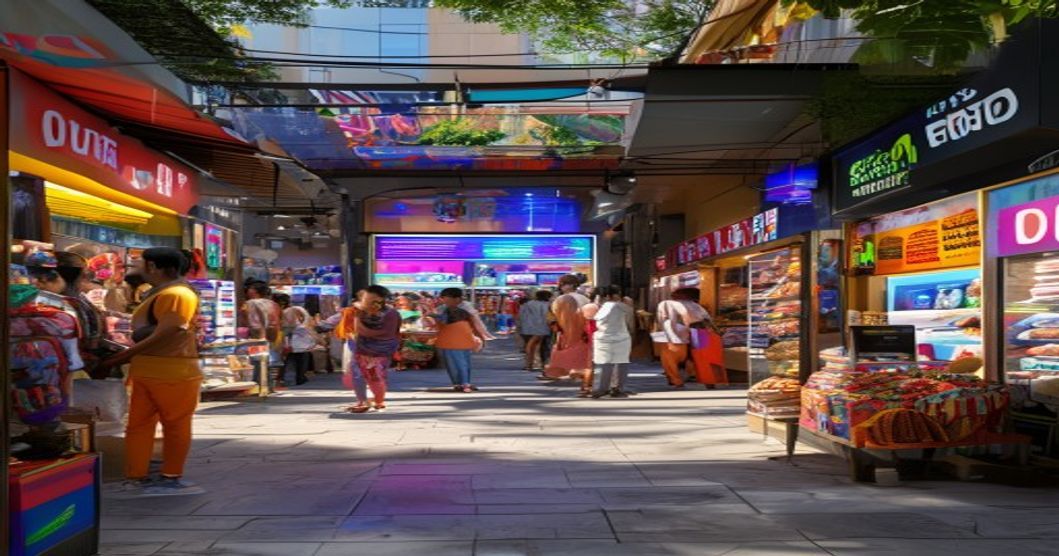
Indian D2C Boom: How Brands Conquer Tier 2/3 with Hyperlocal Strategies
Published by Adsmunch AI
Key D2C Hyperlocal Expansion Strategies in India
| Strategy | Description | Benefits for D2C Brands |
|---|---|---|
| Pop-up Stores/Experience Zones | Temporary physical setups in high-footfall areas like malls, local markets, or commercial spaces. | Direct consumer interaction, brand immersion, immediate sales, valuable feedback, local community building. |
| Partnerships with Local Retailers | Collaborating with kirana stores, pharmacies, or local boutiques for product display and pick-up points. | Extended reach, leveraging existing trust, reduced logistics costs, last-mile delivery efficiency. |
| 'Phygital' Activations | Integrating online discovery with offline engagement, e.g., QR codes in physical stores leading to online offers. | Seamless customer journey, enhanced data collection, higher conversion rates, modern brand image. |
| Localized Marketing Campaigns | Tailoring ad content and promotions to specific regional languages, festivals, and cultural nuances. | Stronger local resonance, increased engagement, improved brand recall, cost-effective targeting. |
| Mobile Experience Vans | Branded vehicles touring different localities to offer product demos, samples, and direct sales. | High visibility, direct access to varied customer segments, experiential marketing, new customer acquisition. |