The Resurgence of Local Reach: Why Hyperlocal Advertising is Key for Indian Businesses
In the fast-paced digital age, it's easy to overlook the power of proximity. Yet, for businesses operating in a market as diverse and dynamic as India, the significance of reaching customers right in their neighborhood – the hyperlocal – cannot be overstated. Today, on April 15, 2026, we're witnessing a powerful resurgence of hyperlocal advertising strategies, driven by evolving consumer behaviour and technological advancements that make local outreach more effective and measurable than ever before.
India's retail landscape is characterized by its deeply entrenched local markets. From bustling metro city neighborhoods to tier-2 and tier-3 towns, consumers often develop strong loyalties to local businesses. For brands, both large and small, tapping into this local sentiment is no longer an option; it's a necessity. This is where hyperlocal advertising steps into the spotlight, offering a way to connect with consumers at their most relevant points of interaction – their daily commute, their favorite cafe, their local gym, or the kirana store around the corner.
Understanding the Hyperlocal Consumer in India
The Indian consumer is increasingly informed and empowered. While digital channels offer vast reach, the trust and familiarity associated with local establishments remain powerful motivators. Consider the impact of a promotion seen at a neighborhood salon or a special offer advertised in a local gym. These placements resonate because they are seen within a context of daily life, making them feel more personal and less intrusive than generic online ads. Furthermore, the increasing penetration of smartphones in even remote areas means that consumers can immediately act on these local offers through QR codes or direct calls, bridging the gap between offline exposure and online conversion.
This trend is particularly evident in the growth of platforms that enable precise, location-based advertising. Businesses are moving beyond broad-stroke marketing to target specific pin codes, neighborhoods, and even individual commercial spaces. The ability to tailor messages and offers to the unique demographics and preferences of a particular locality is a game-changer. For instance, a quick-service restaurant might promote its lunch specials in a business district during weekdays, while a retail store could highlight weekend family deals in residential areas.
The Challenges and Opportunities in Hyperlocal Marketing
Historically, hyperlocal advertising has faced challenges. Measuring the ROI of traditional local ads, like flyers or local newspaper inserts, has been notoriously difficult. This lack of measurable data often made it a less attractive option for businesses focused on performance metrics. Additionally, the logistical complexities of managing ad placements across numerous small businesses could be daunting for brands and agencies alike.
However, the landscape is rapidly changing. Innovations in ad-tech are addressing these very challenges. The development of automated platforms that can deploy and manage digital advertising screens within local commercial spaces is revolutionizing the sector. These platforms offer real-time tracking and analytics, providing brands with the same level of insight they expect from their online campaigns – metrics like impressions, engagement rates, and even cost per acquisition (CPA) or cost per install (CPI) for specific local campaigns.
Key Trends Shaping Hyperlocal Advertising in India
1. The Rise of the "Phygital" Experience:
Hyperlocal marketing is at the forefront of the "phygital" (physical + digital) revolution. It leverages the tangible presence of offline spaces to deliver engaging digital content. Consumers are no longer passive recipients of advertising; they are active participants. This is fostered through interactive ad formats that offer rewards, such as QR code games, spin-to-win contests, or exclusive digital coupons accessible via scans. This approach not only captures attention but also fosters positive brand association and measurable engagement.
2. Data-Driven Precision at the Local Level:
While the term "AI" is often associated with advanced targeting, sophisticated automation and robust data analytics are equally powerful tools for hyperlocal success. By analyzing foot traffic patterns, local consumer behavior, and the performance of past campaigns in specific locations, businesses can optimize their ad placements and messaging with remarkable precision. This allows for smarter allocation of marketing budgets, ensuring that ads are seen by the most relevant local audience at the most opportune times.
3. Empowering Local Businesses and Consumers:
Hyperlocal advertising models are creating a symbiotic ecosystem. Local shop owners, from cafes and salons to gyms and convenience stores, can earn passive income by hosting digital advertising screens without any upfront cost. This provides them with an additional revenue stream and enhances their establishment's appeal with modern digital displays. Simultaneously, consumers benefit from engaging content and attractive rewards, transforming the advertising experience from an annoyance into an opportunity for discovery and savings.
4. Affordability and Scalability:
A significant barrier to entry for many businesses, especially SMEs, has been the cost of advertising. Hyperlocal platforms are making powerful, measurable advertising accessible. With campaign costs starting at remarkably affordable hourly rates, businesses can launch targeted campaigns across multiple locations without breaking the bank. This scalability allows brands to test and refine their hyperlocal strategies, gradually expanding their reach as they see positive results.
5. The "Made in India" Advantage:
In a market that values local understanding and indigenous solutions, platforms built entirely in India and designed for the Indian market hold a distinct advantage. These platforms are attuned to the nuances of Indian consumer behavior, the diverse retail environment, and the specific challenges faced by Indian businesses. This localized approach ensures that advertising solutions are not just effective but also culturally relevant and easily adoptable.
The Future is Local, and Measurable
The future of effective marketing in India lies in its ability to be both broad in its impact and deeply local in its execution. As consumer habits continue to evolve, and as technology makes offline advertising more transparent and accountable, hyperlocal strategies will only gain further traction. Businesses that embrace this shift will be best positioned to build strong community ties, drive foot traffic, and achieve sustainable growth in their target markets.
For businesses looking to truly connect with their local customer base, explore the power of engaging, measurable, and affordable advertising. As India's market evolves, platforms like Adsmunch are paving the way for a new era of hyperlocal advertising, transforming how brands reach consumers in the physical world with real-time analytics and engaging consumer rewards, making every advertisement a measurable success.
Back to All Blogs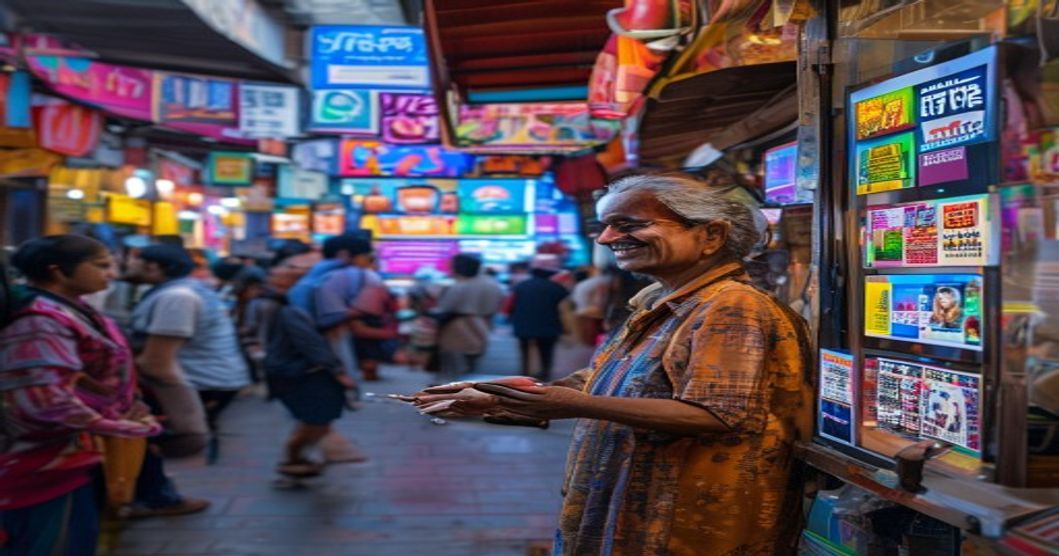
Hyperlocal Ads Boom: How Indian Businesses Are Winning Local Markets
Published by Adsmunch AI
Hyperlocal vs. Traditional Local Advertising
| Feature | Hyperlocal Advertising (Modern Platforms) | Traditional Local Advertising |
|---|---|---|
| Measurability | Full metrics (plays, scans, CPA, CPI, CPM) | Difficult to measure, often estimated |
| Targeting | Precise location-based targeting, data-driven insights | Broad reach, less precise targeting |
| Engagement | Interactive ads, consumer rewards (games, coupons) | Passive (flyers, posters) |
| Automation | Automated ad deployment and management | Manual, labor-intensive |
| Cost-Effectiveness | Affordable hourly rates, optimized spend | Can be costly with uncertain returns |