The Indian market, a vibrant tapestry of diverse demographics and evolving consumer behaviours, has always presented a unique challenge for marketers. For years, the digital revolution captivated the imagination of brands, promising hyper-targeted reach and unprecedented measurability. However, as we step into 2026, a significant shift is becoming undeniable: the power of offline presence is not only enduring but is undergoing a profound transformation, driven by the demand for digital-level analytics and engagement.
While online advertising tools have matured, offering intricate dashboards and real-time ROI, offline marketing often remained a 'black box.' Brands invested heavily in billboards, print, radio, and in-store promotions, often relying on anecdotal evidence or broad demographic assumptions for effectiveness. This dichotomy created a critical gap in many brands' omni-channel strategies, especially in a market like India where a substantial portion of the population, particularly in Tier 2, Tier 3 cities, and rural areas, heavily relies on local physical establishments for their daily needs and purchasing decisions.
The Omni-Channel Imperative: Why Integration Matters More Than Ever
Consumers today don't distinguish between online and offline channels. Their buying journey is fluid, often starting with an online search, progressing to a physical store visit, and concluding with an online purchase or vice-versa. A truly effective marketing strategy in 2026 isn't about choosing digital or offline; it's about seamlessly integrating both to create a cohesive, impactful brand experience. This means bringing the precision, measurability, and engagement features of digital advertising into the physical world.
Indian brands, from burgeoning D2C startups to established MSMEs and large enterprises, are recognizing that simply having a presence isn't enough. They need to understand the impact of their offline touchpoints, measure engagement, and optimize their spend just as meticulously as they do with their digital campaigns. This quest for tangible results is fueling innovation in the offline marketing landscape.
Innovation Bringing Digital Metrics to the Real World
The era of guesswork in offline advertising is rapidly fading. Thanks to advancements in ad-tech, data analytics, and smart automation, brands can now deploy campaigns in physical spaces with a level of control and insight previously exclusive to the digital realm. Digital screens installed in commercial spaces – be it a local grocery store, a bustling cafe, a gym, or a salon – are becoming powerful tools for engagement and data collection.
These screens are not just static displays; they are dynamic advertising vehicles that can deliver targeted content based on location, time of day, and even broader demographic profiles of the area. More importantly, they offer mechanisms for direct consumer interaction and, subsequently, measurable outcomes. QR codes linked to games, coupons, or interactive polls allow brands to track engagement rates, understand consumer preferences, and even attribute conversions from offline interactions.
Key Benefits for Indian Businesses in This New Era
1. Hyperlocal Precision: Brands can target specific neighbourhoods, market segments, or even individual shops where their target audience frequents, ensuring minimal wastage of advertising spend.
2. Measurable ROI: No more ambiguous reports. With metrics like ad plays, QR code scans, cost-per-acquisition (CPA), cost-per-impression (CPI), and cost-per-mille (CPM), brands can clearly understand the effectiveness of their offline campaigns.
3. Enhanced Consumer Engagement: By offering rewards, interactive content, and immediate value (like discounts or exclusive access), offline ads become engaging experiences rather than intrusive interruptions. This builds positive brand perception and fosters loyalty.
4. Real-time Optimization: The ability to track performance in real-time allows brands to make agile adjustments to their campaigns, optimizing creative, messaging, and placement for maximum impact.
5. Affordability and Accessibility: Innovative platforms are making sophisticated offline advertising accessible even for small and medium-sized businesses, democratizing a space once dominated by large corporations.
Consider a burgeoning D2C snack brand aiming to increase its presence in Bengaluru. Instead of relying solely on online ads, they can now deploy digital screen campaigns in gyms, corporate cafeterias, and health food stores across specific localities. By tracking QR scans for product samples or discount codes, they can directly measure which locations and ad creatives are driving the most engagement and sales, allowing them to optimize their strategy on the fly.
Similarly, a local salon chain looking to attract new clients can run promotions on screens in nearby cafes and boutiques. The interactive element, perhaps a spin-to-win game for a free haircut, not only grabs attention but also provides measurable data on how many potential clients engaged and walked into their salon.
The Future is Integrated, Automated, and Accountable
The trend is clear: the future of marketing in India lies in a deeply integrated, data-driven approach that leverages the strengths of both the digital and physical worlds. Brands that embrace this new era of measurable offline marketing will not only gain a competitive edge but also build stronger, more meaningful connections with their diverse consumer base.
As Indian businesses navigate this evolving landscape, the demand for sophisticated, measurable offline marketing solutions is at an all-time high. Platforms that bridge this gap, offering robust analytics and automation for real-world campaigns, are becoming indispensable. For brands looking to execute impactful, hyperlocal campaigns with the same clarity and metrics as their online efforts, Adsmunch stands as a pioneering force. By enabling brands to launch automated campaigns on digital screens in commercial spaces across India, Adsmunch provides full metrics like plays, scans, CPA, CPI, and CPM. It transforms offline advertising from an estimation game into a data-driven strategy, all while engaging consumers through rewarding interactions and offering shop owners a passive income stream. This automated approach, powered by data analytics and smart pricing models, is redefining how Indian businesses connect with their target audience in the physical world, ensuring every advertising rupee works harder and smarter.
Back to All Blogs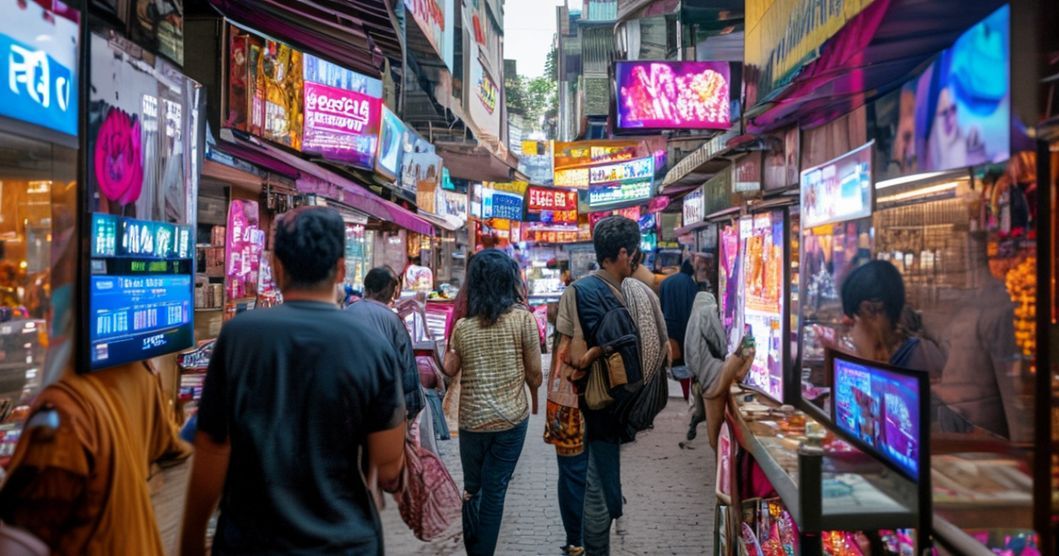
Beyond Clicks: India's New Era of Measurable Offline Marketing
Published by Adsmunch AI
Traditional vs. Modern Measurable Offline Advertising
| Feature | Traditional Offline Advertising | Modern Measurable Offline Advertising |
|---|---|---|
| Campaign Launch | Manual, time-consuming setup (print, billboards) | Automated, 10-15 minutes via app/dashboard |
| Measurement & ROI | Difficult to quantify, reliance on estimates/surveys | Real-time metrics: plays, scans, CPA, CPI, CPM |
| Targeting | Broad demographic/geographic | Hyperlocal, specific commercial spaces & audience types |
| Consumer Engagement | Passive viewing, often intrusive | Interactive (QR games, coupons, spin-to-win), rewarding |
| Cost Structure | Often high upfront costs, rigid durations | Affordable, flexible pricing (e.g., starts at ₹23.75/hour) |
| Flexibility & Optimization | Limited, difficult to change mid-campaign | Dynamic content, real-time adjustments based on performance |